Redesign Enterprise B2B2C SaaS Platform, Define Atomic Design System, AI Integration
Redesign Enterprise B2B2C SaaS Platform, Define Atomic Design System, AI Integration
Redesign Enterprise B2B2C SaaS Platform, Define Atomic Design System, AI Integration
Who’s Awin?
Who’s Awin?
Who’s Awin?
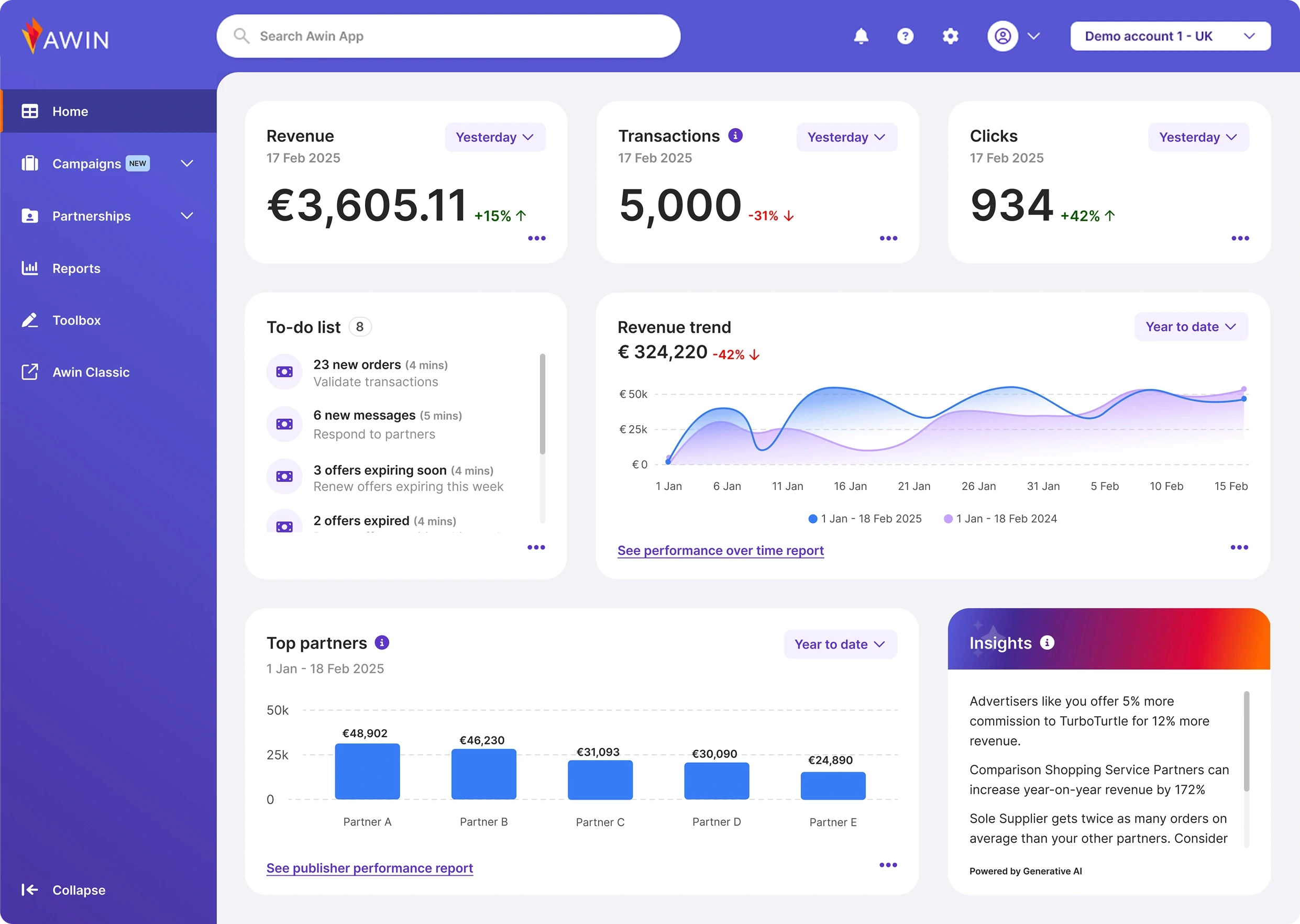
AWIN is one of the world’s largest affiliate marketing platforms, connecting brands, publishers, and partners through a complex ecosystem of data-driven tools.
AWIN is one of the world’s largest affiliate marketing platforms, connecting brands, publishers, and partners through a complex ecosystem of data-driven tools.
The platform powers thousands of partnerships globally and manages large volumes of performance, reporting, and campaign data across multiple markets.
The platform powers thousands of partnerships globally and manages large volumes of performance, reporting, and campaign data across multiple markets.

Context, Scope
Context, Scope
Context, Scope
The Awin ecosystem had grown significantly over the years, resulting in a fragmented experience across the entire product: platform, website, navigation, components, flows, and interactions.
Different teams worked independently, creating their own patterns, UI elements, and terminology. This led to inconsistent behavior, duplicated functionality, accessibility gaps, and an overall lack of alignment in both design and execution.
The goal was to unify the entire experience, create a scalable design system foundation, and redesign the platform to improve usability, clarity, and cross-team collaboration.
The Awin ecosystem had grown significantly over the years, resulting in a fragmented experience across the entire product: platform, website, navigation, components, flows, and interactions.
Different teams worked independently, creating their own patterns, UI elements, and terminology. This led to inconsistent behavior, duplicated functionality, accessibility gaps, and an overall lack of alignment in both design and execution.
The goal was to unify the entire experience, create a scalable design system foundation, and redesign the platform to improve usability, clarity, and cross-team collaboration.
&
&
Objectives
Create a scalable Design System from scratch using an Atomic Design approach.
Create a scalable Design System from scratch using an Atomic Design approach.
Unify visual and interaction patterns across the entire platform and website.
Unify visual and interaction patterns across the entire platform and website.
Redesign the entire platform and improving interaction design.
Redesign the entire platform and improving interaction design.
Improve navigation, usability, and discoverability through structured, predictable UX patterns.
Improve navigation, usability, and discoverability through structured, predictable UX patterns.
Establish a cross-team collaboration workflow between Product, Design, and Engineering.
Establish a cross-team collaboration workflow between Product, Design, and Engineering.
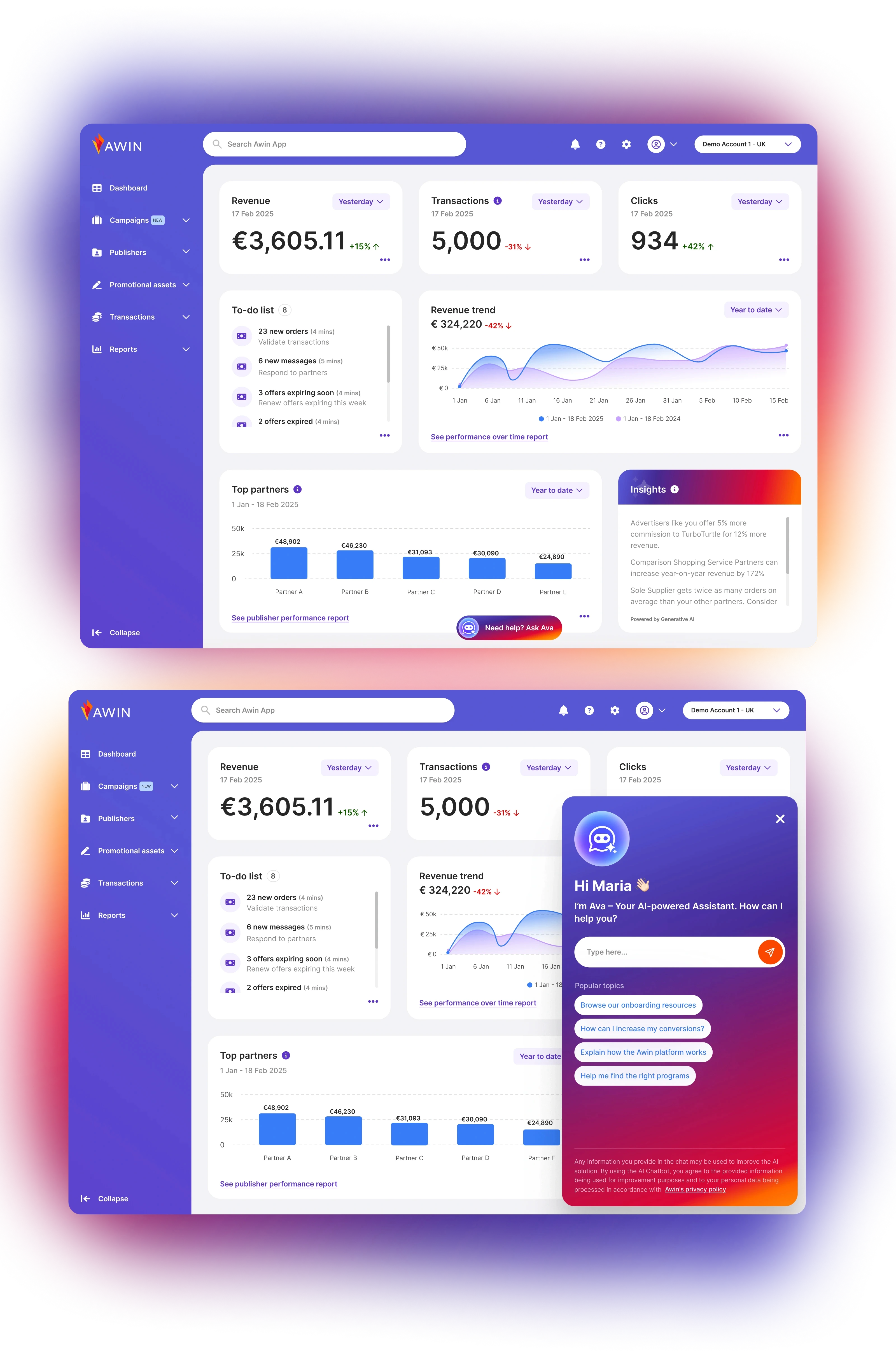
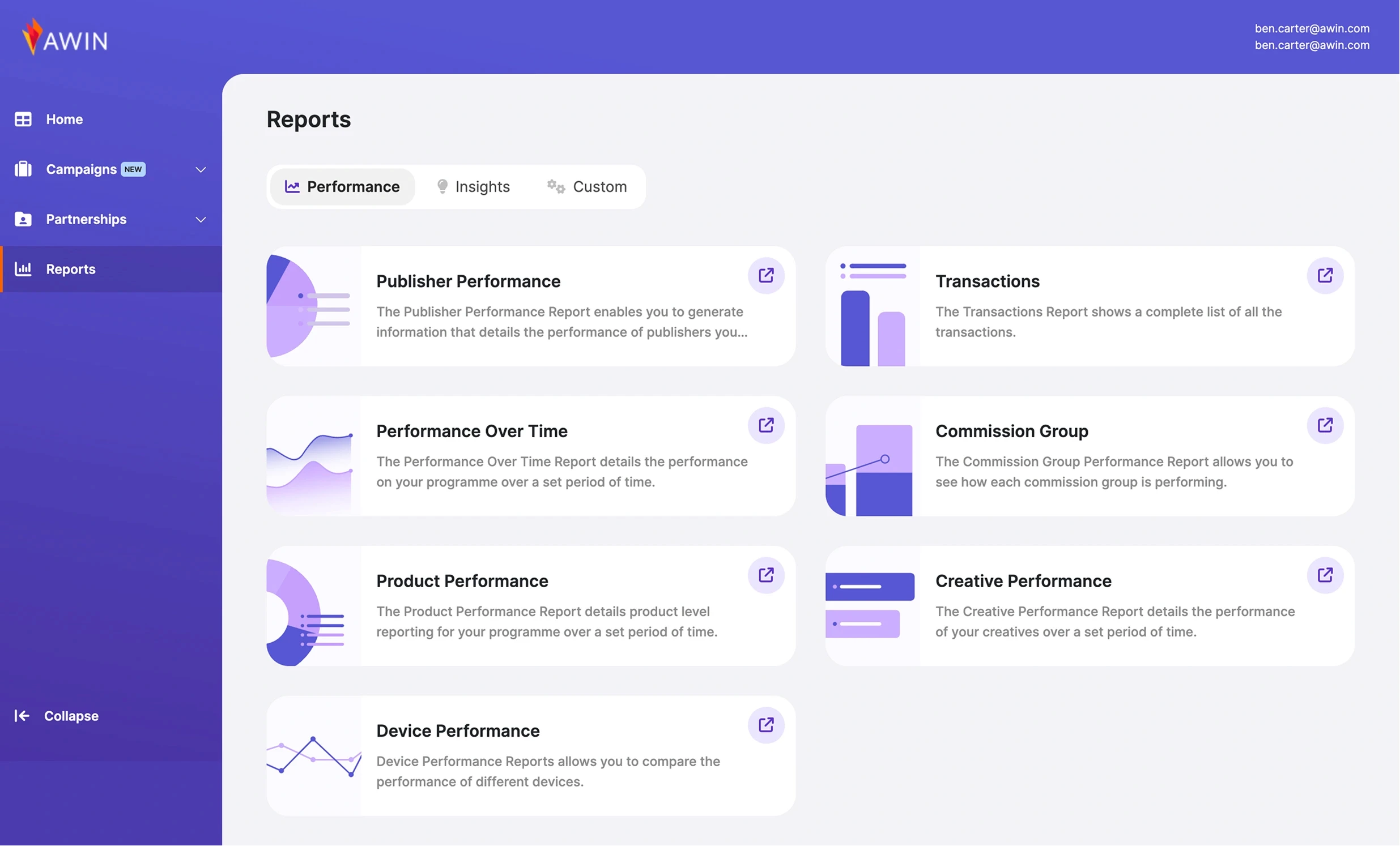
Modernize key product experiences, including Dashboard, Reporting, Commission Manager, Comms Center, and Publisher tools.
Modernize key product experiences, including Dashboard, Reporting, Commission Manager, Comms Center, and Publisher tools.
Improve accessibility and align with WCAG standards.
Improve accessibility and align with WCAG standards.
Introduce intelligent, scalable foundations and AI-powered enhancements across key parts of the product.
Introduce intelligent, scalable foundations and AI-powered enhancements across key parts of the product.
Objectives
Objectives
Objectives
My Role
My Role
My Role
I joined Awin as Lead Product Designer & Design System Lead, owning the full redesign of the platform and website while leading a 12-person design team (UX, UI, Content, Copy, Research).
I joined Awin as Lead Product Designer & Design System Lead, owning the full redesign of the platform and website while leading a 12-person design team (UX, UI, Content, Copy, Research).
I created a scalable cross-platform Design System that unified visual identity, interaction patterns, and accessibility across the entire ecosystem.
I created a scalable cross-platform Design System that unified visual identity, interaction patterns, and accessibility across the entire ecosystem.

Design System Creation from Scratch
Creating the Design System from scratch, using an Atomic Design approach (tokens, atoms, molecules, organisms).
Full Platform & Website Redesign
Redesigning the entire platform and its website, aligning all modules under a unified UX and visual direction.
Responsive & Cross-Platform Experience
Creating a fully responsive (PWA) and scalable experience across desktop, tablet, and mobile.
Accessibility & Improvements
Ensuring the platform met AA / AAA WCAG accessibility standards.
Developer Handoff & Implementation Support
Supporting front-end implementation by providing specs, documentation, edge cases, and dev-ready component guidelines.
Interaction Models & Component Behavior
Defining and documenting interaction patterns, component behavior, states, and accessibility guidelines.
To make this possible, I aligned all Product Owners through dedicated sessions, helped them redefine their roadmaps, and established a shared design language that enabled all teams to work under the same unified system.
To make this possible, I aligned all Product Owners through dedicated sessions, helped them redefine their roadmaps, and established a shared design language that enabled all teams to work under the same unified system.
To make this possible, I aligned all Product Owners through dedicated sessions, helped them redefine their roadmaps, and established a shared design language that enabled all teams to work under the same unified system.
Mobile App UX & UI Creation
Designing the mobile app experience to support cross-platform user workflows.
Cross-Functional Leadership
Leading cross-functional alignment with Product Owners, Developers, and Analysis teams.
Design Review & Quality Assurance
Reviewing and approving all design work from the wider design team to eliminate inconsistencies and design debt.
Central UX/UI Point of Contact
Acting as the main point of contact for everything related to UX, UI, Design System, and consistency across teams.
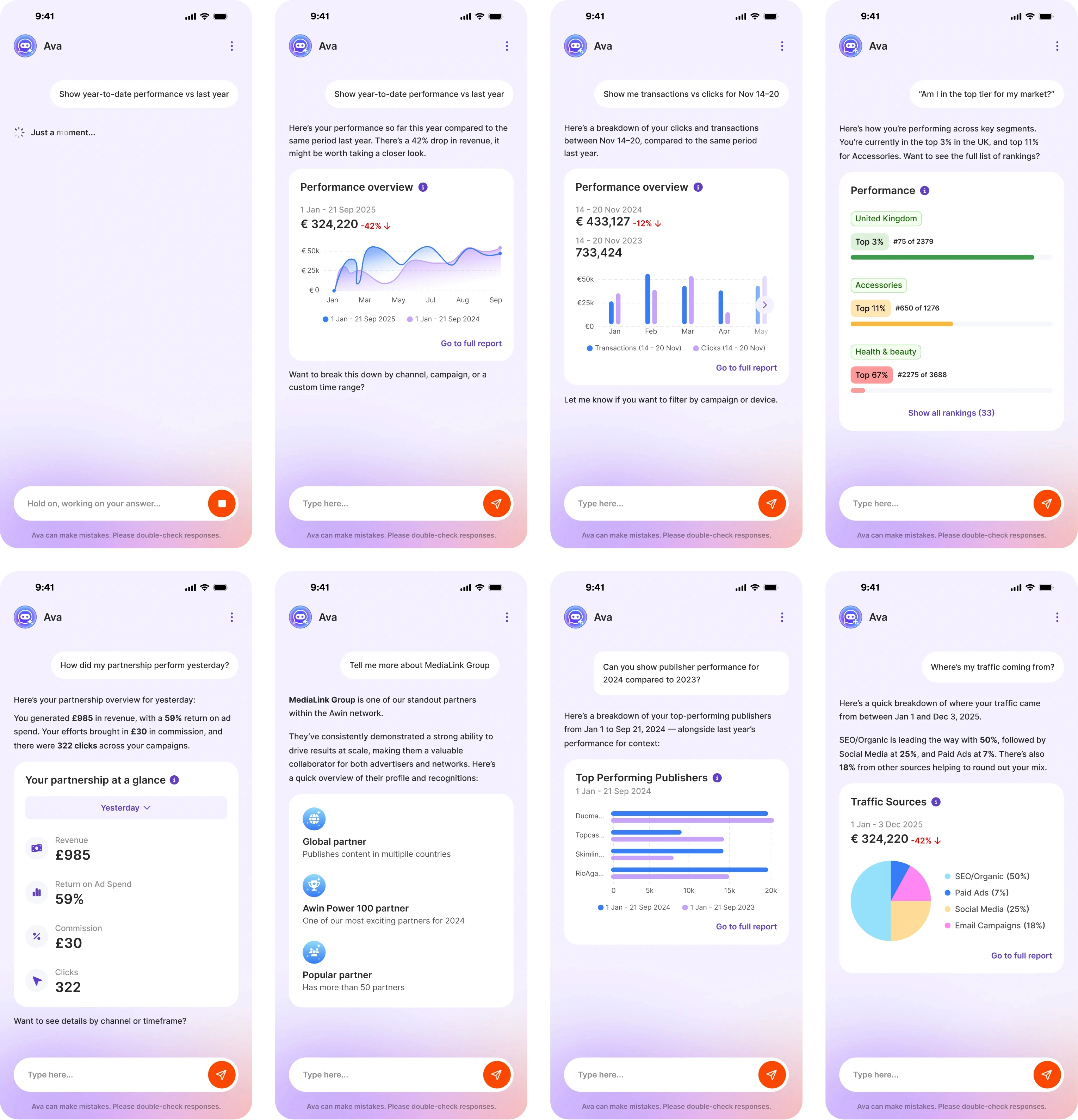
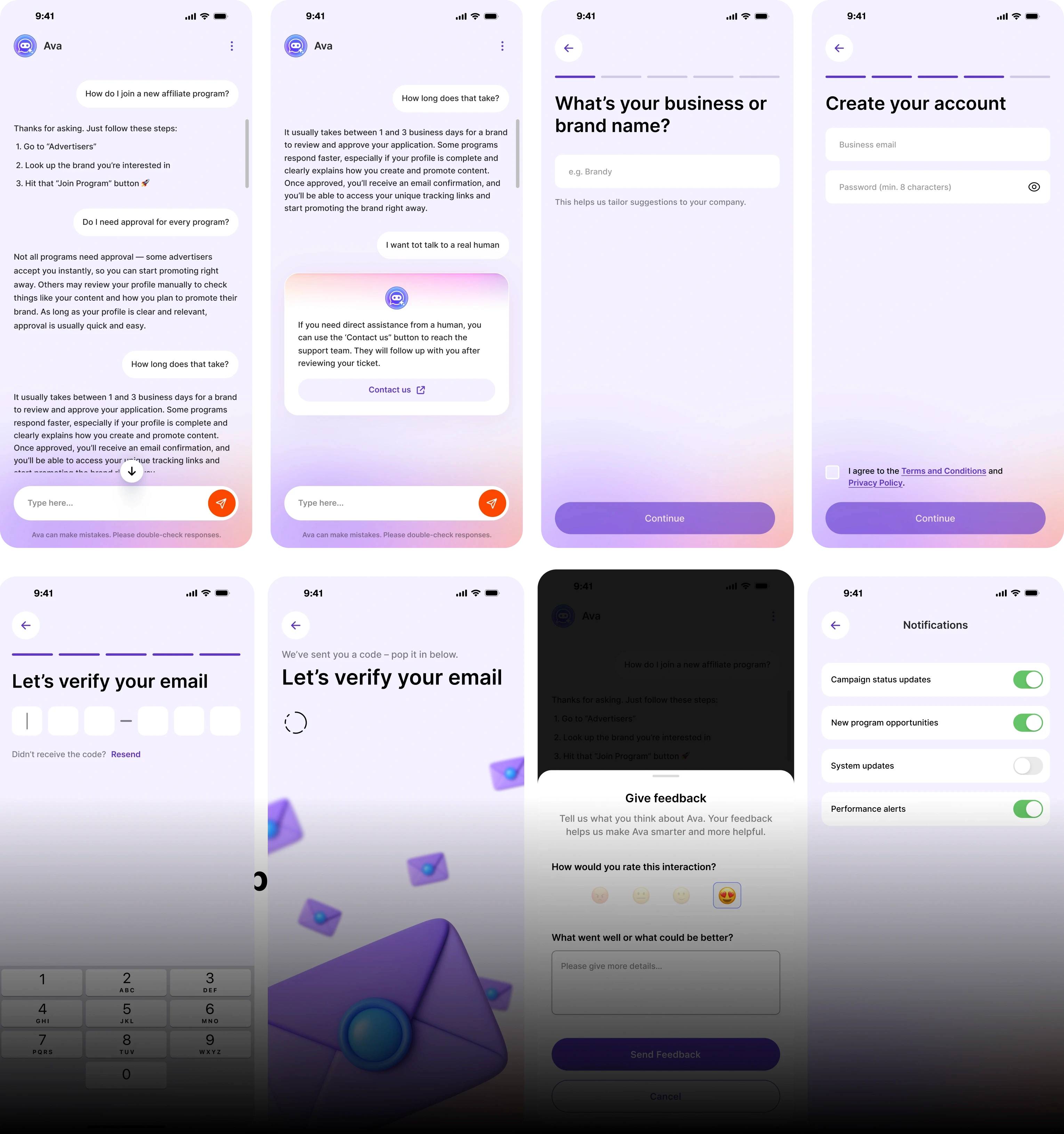
AI Integration & Intelligent Workflows
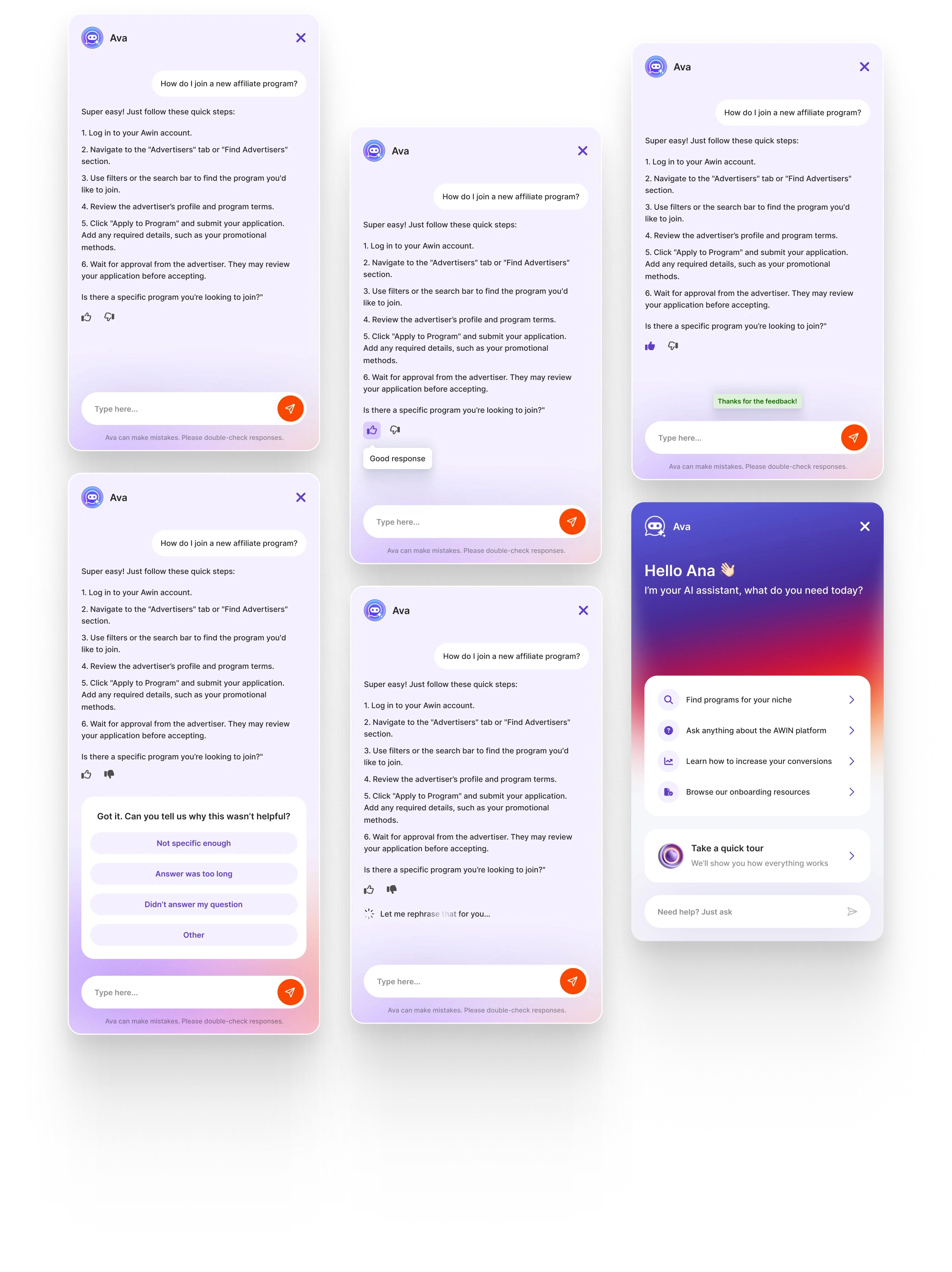
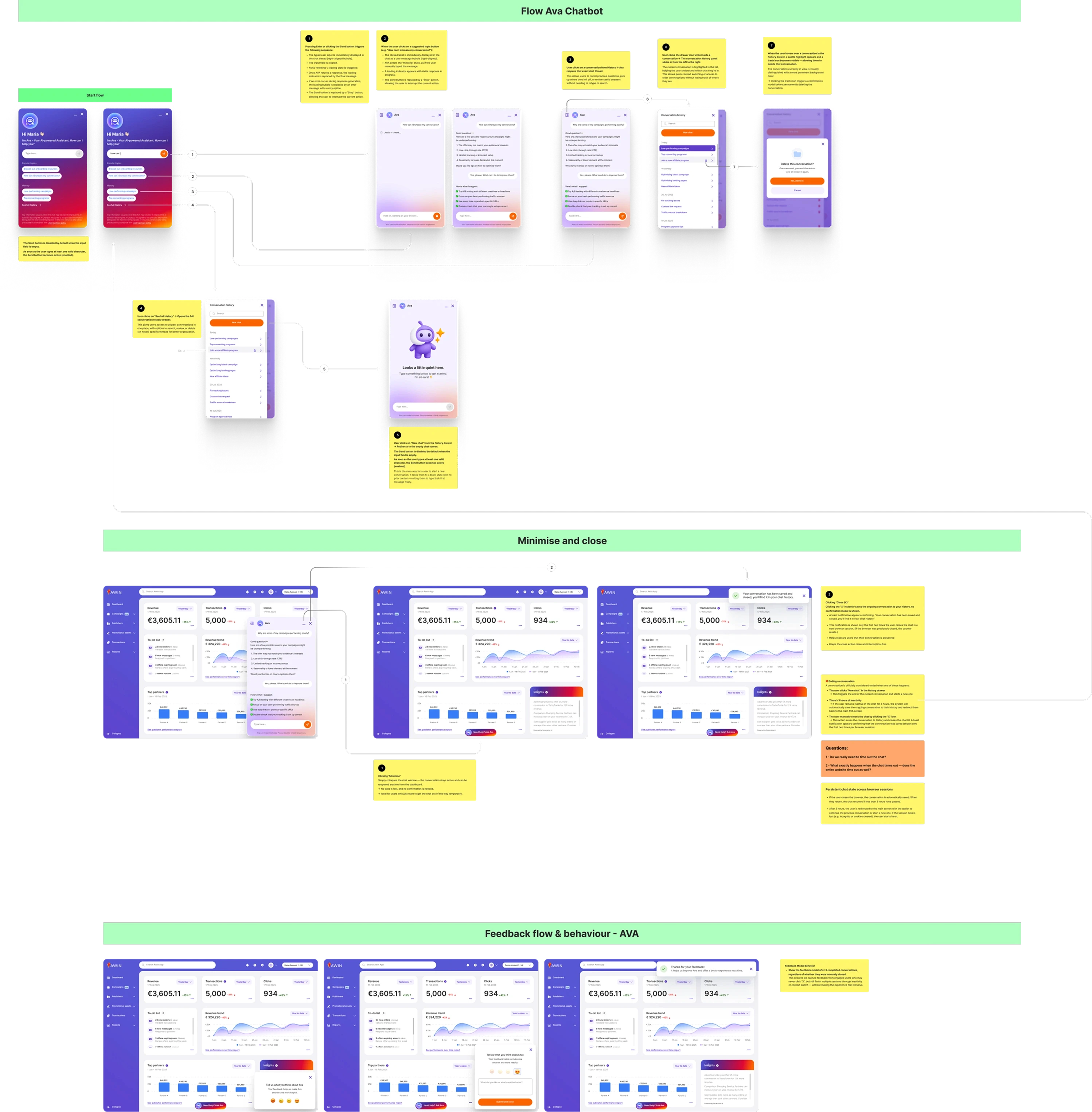
Integrating AI-driven insights into the platform, including dashboard enhancements and automated user flows.
Cross-Team Workflow & Collaboration
Building the collaboration workflow between designers, myself, and front-end developers to ensure alignment and clean implementation.
Problems
Problems
Problems
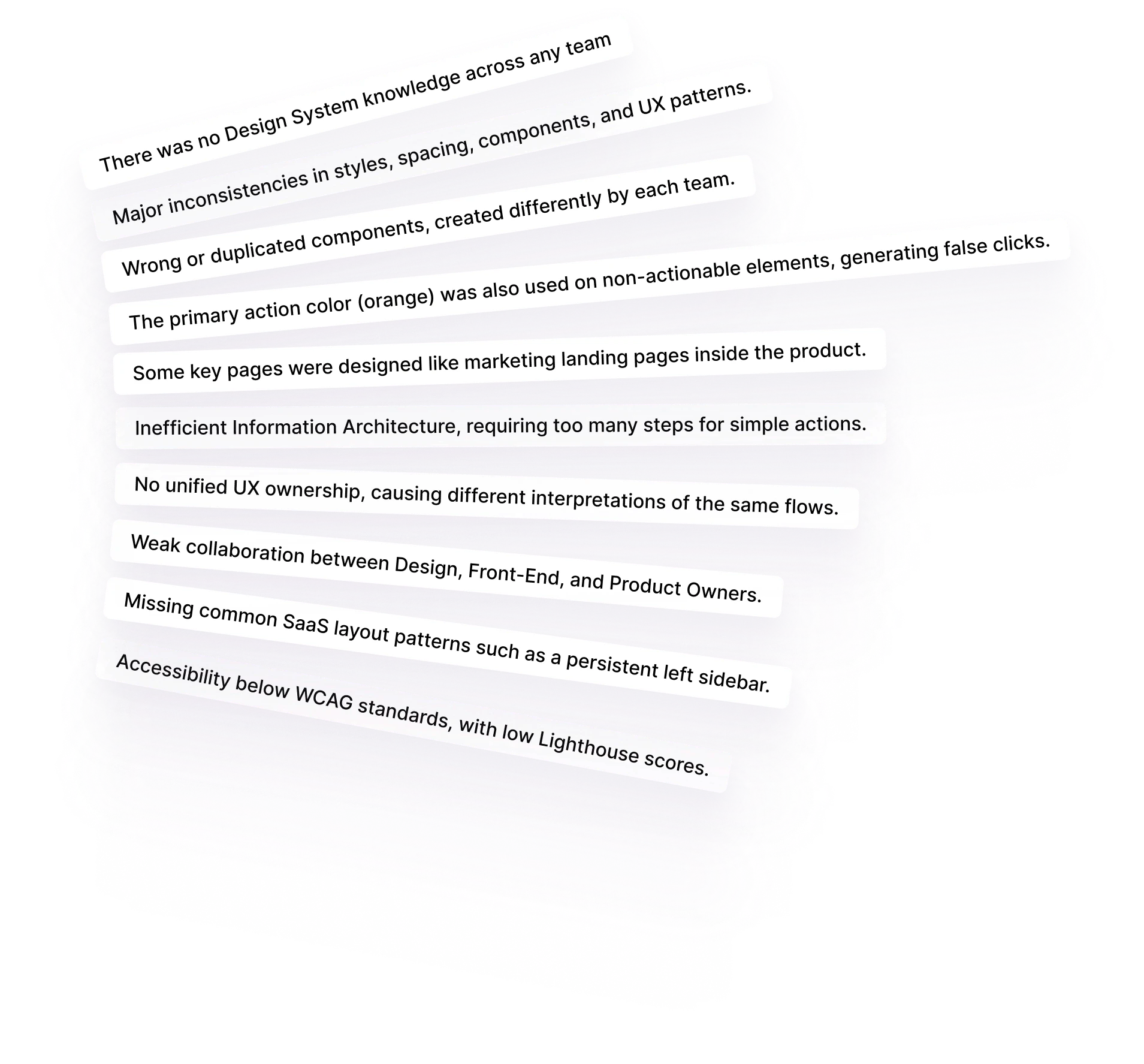
The Awin product ecosystem was built by multiple independent teams, each delivering features with different visual styles, patterns, and interaction models.
The Awin product ecosystem was built by multiple independent teams, each delivering features with different visual styles, patterns, and interaction models.
With no Design System and no single point of ownership, the platform became fragmented and inconsistent across the entire experience, platform, website, and cross-device flows.
With no Design System and no single point of ownership, the platform became fragmented and inconsistent across the entire experience, platform, website, and cross-device flows.
I also had to advocate for the Atomic Design System across the entire company, since many teams didn’t fully understand what a Design System is and there were no developers prepared to support it.
I also had to advocate for the Atomic Design System across the entire company, since many teams didn’t fully understand what a Design System is and there were no developers prepared to support it.
So I assembled a dedicated dev group, held workshops and presentations, and educated teams on why Awin needed a unified, scalable system.
So I assembled a dedicated dev group, held workshops and presentations, and educated teams on why Awin needed a unified, scalable system.
Key issues
identified
Key issues
identified
Key issues
identified
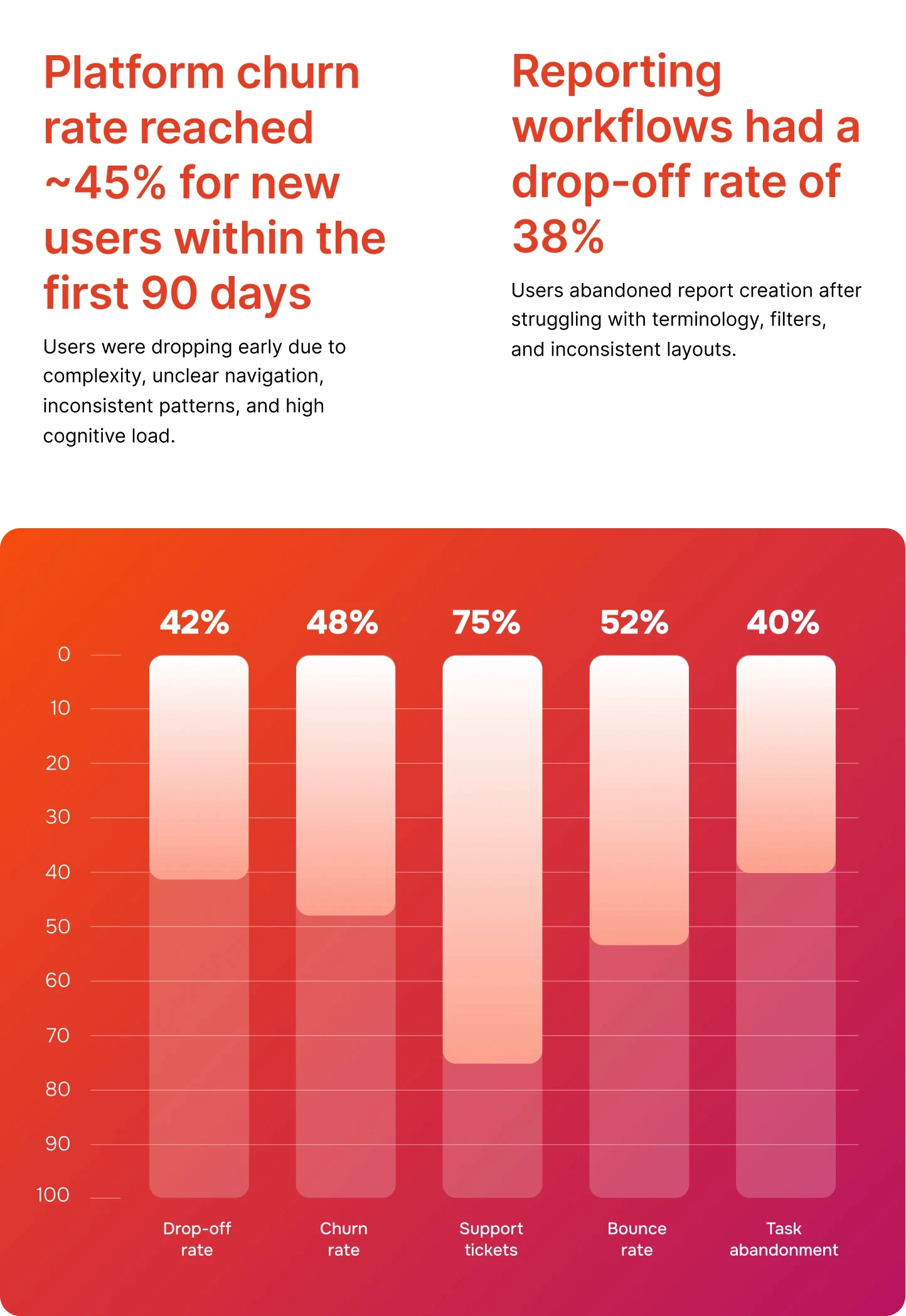
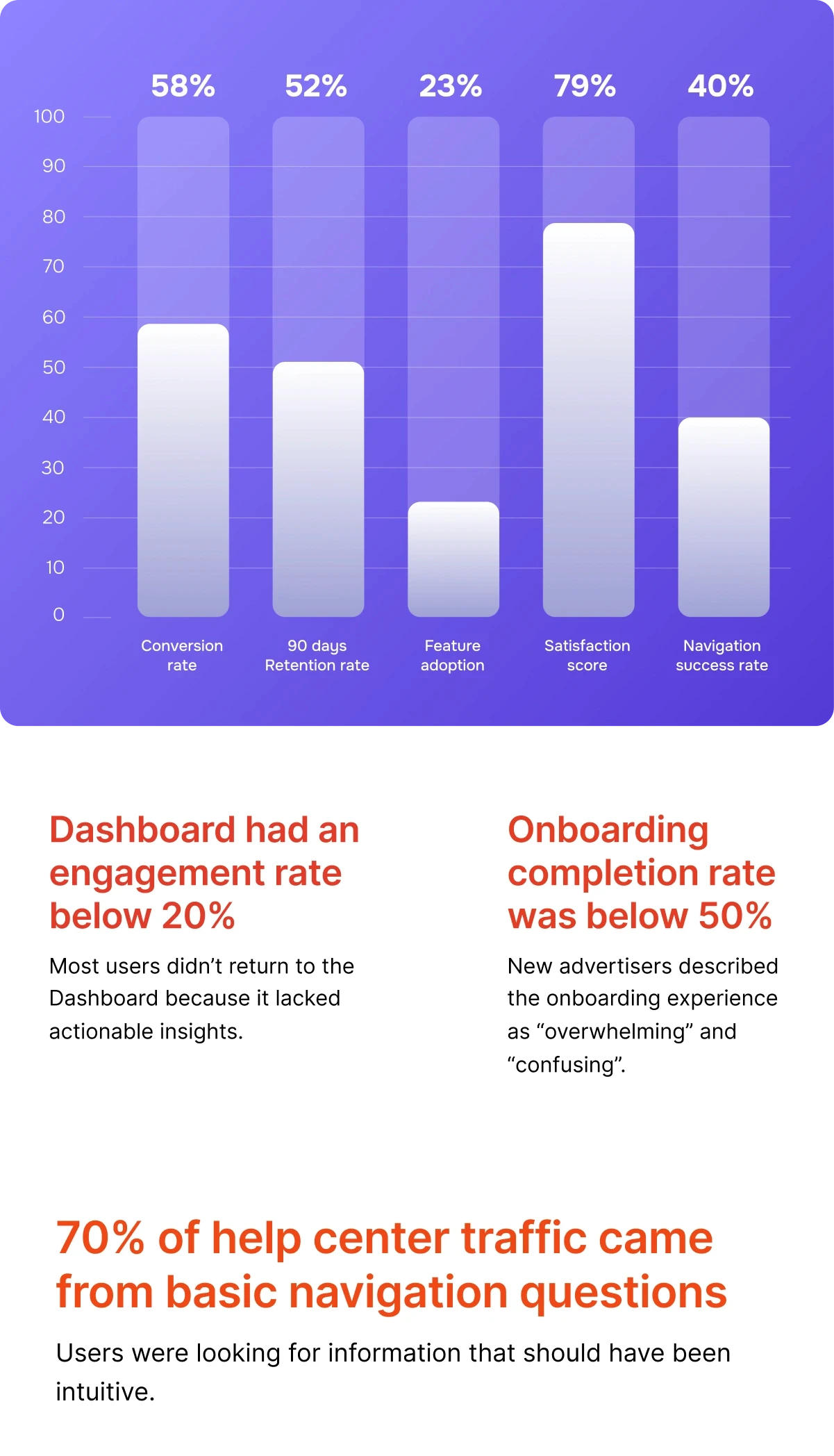
UX Metrics (before redesign)
UX Metrics (before redesign)
UX Metrics (before redesign)

Redesign Strategy
Redesign Strategy
Redesign Strategy
First things first, I defined the
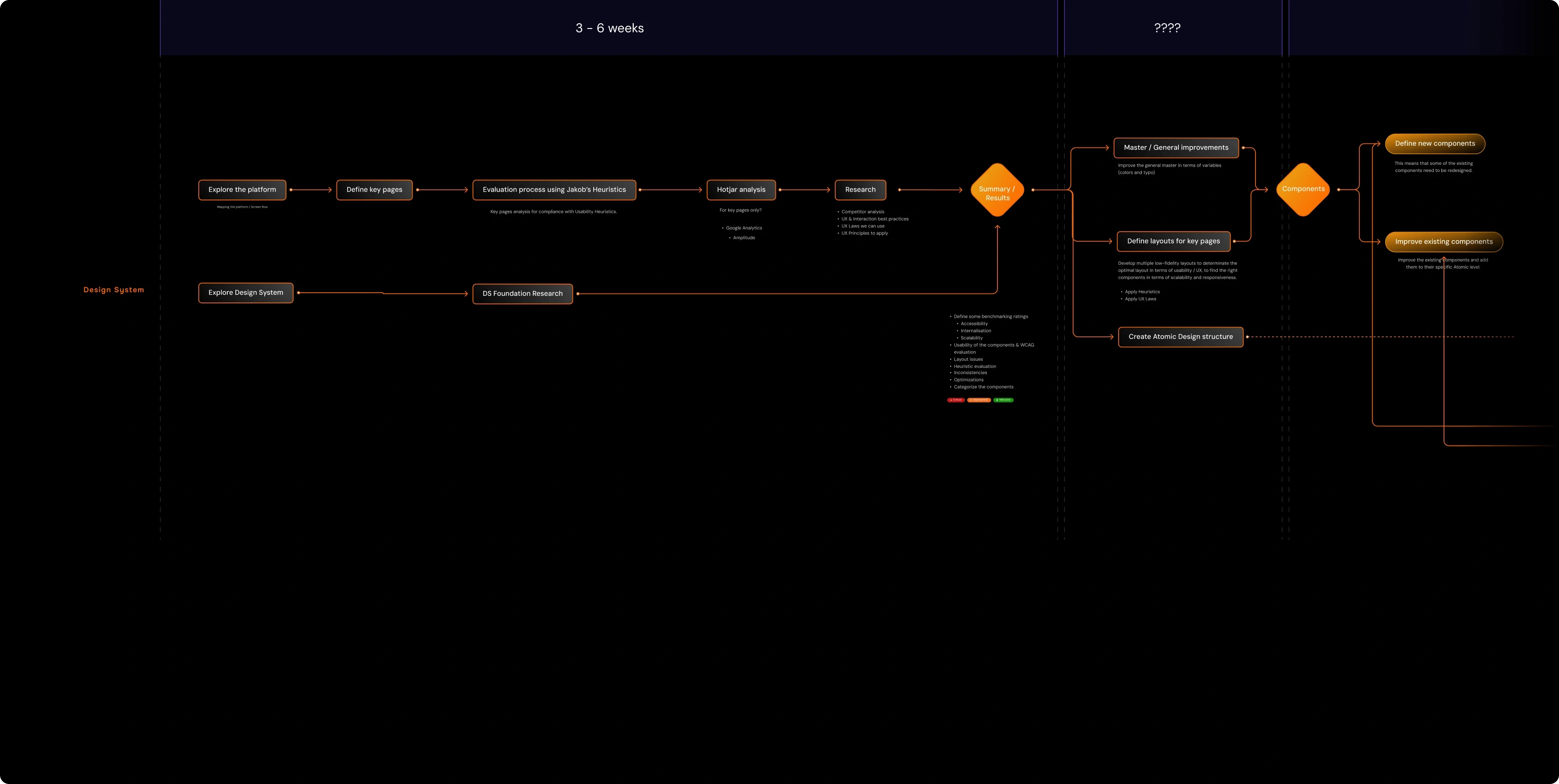
After that,
After that,
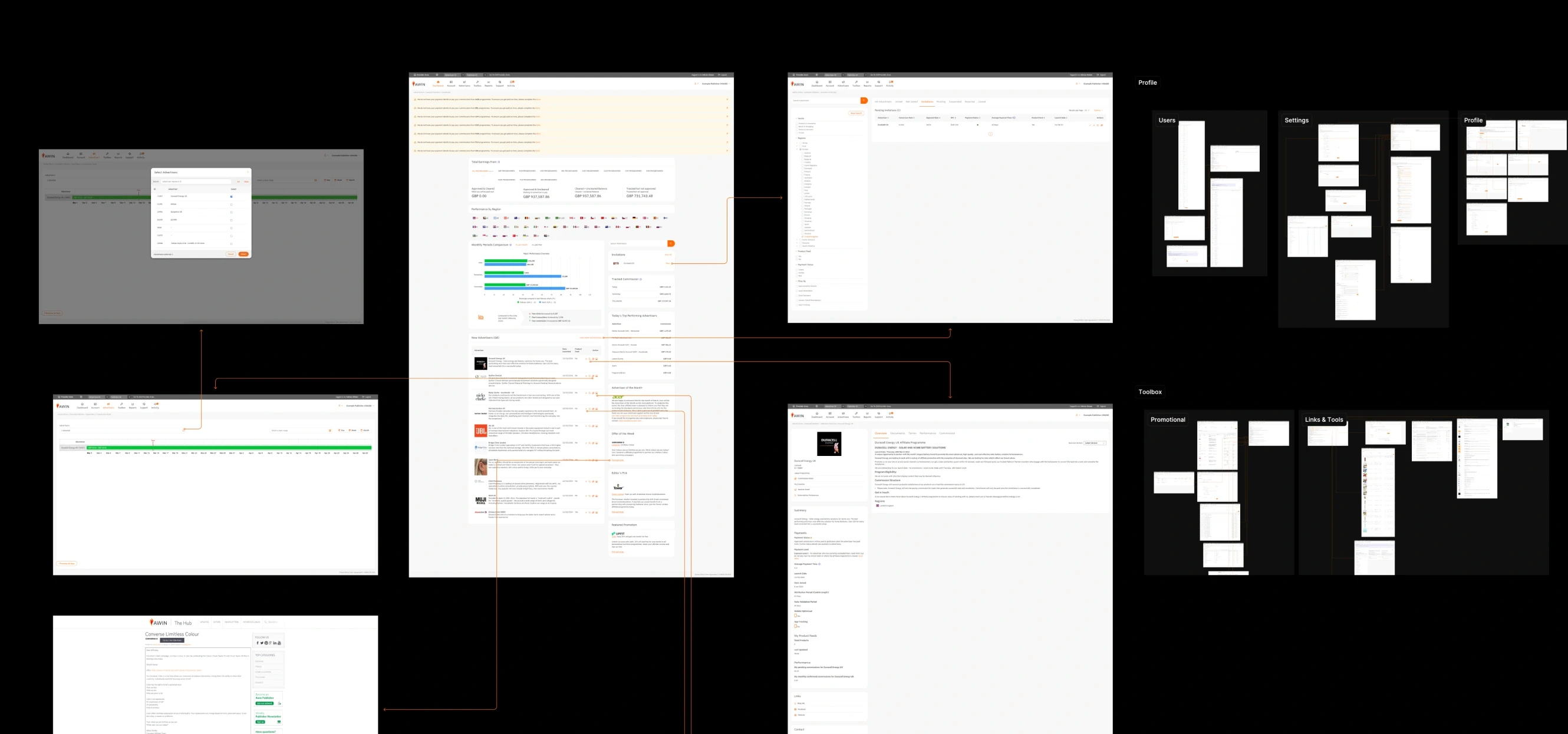
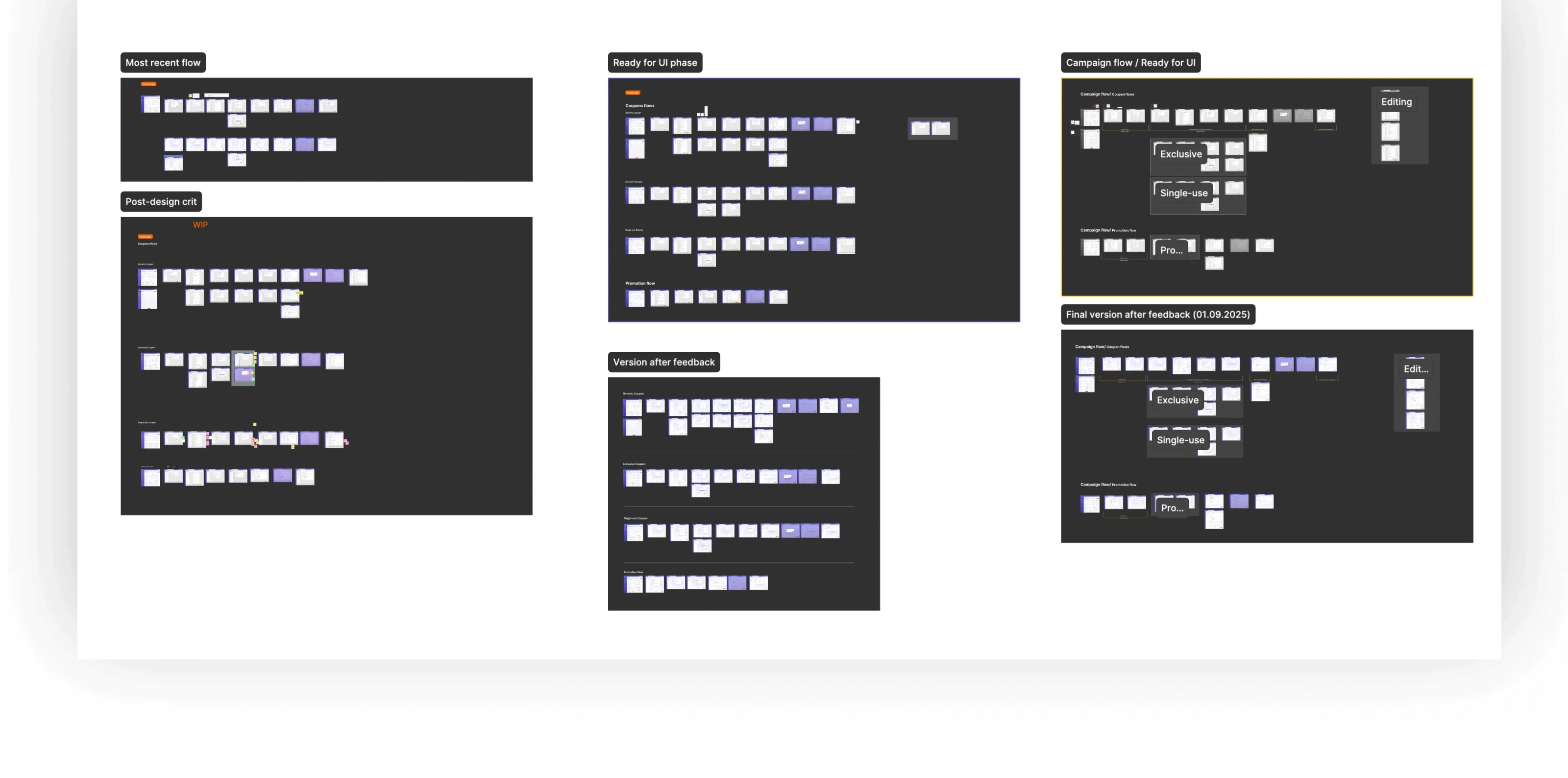
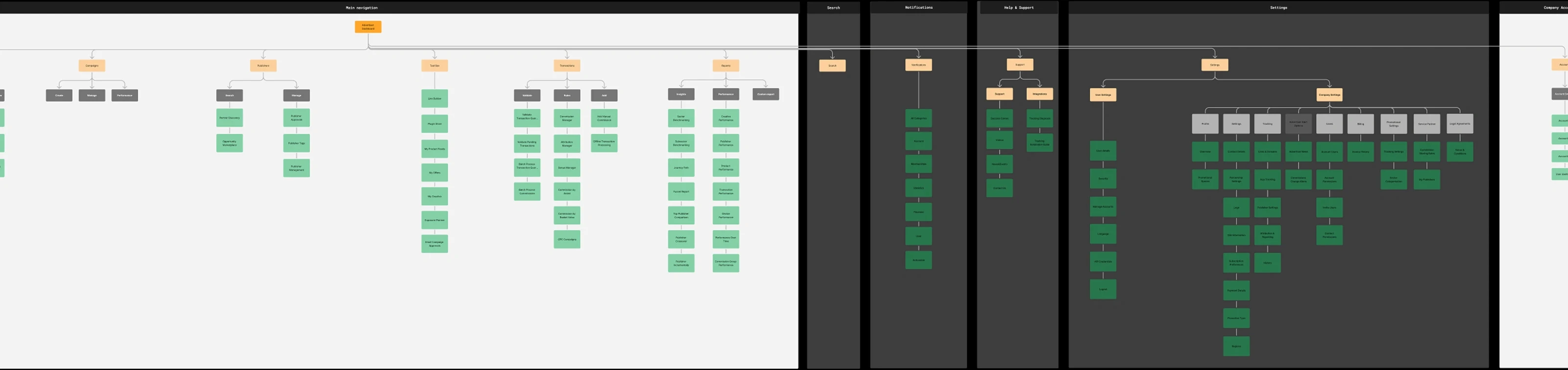
I mapped the
entire platform through
a screen-flow analysis
I mapped the
entire platform through
a screen-flow analysis
I mapped the
entire platform through
a screen-flow analysis
I mapped the
entire platform through
a screen-flow analysis

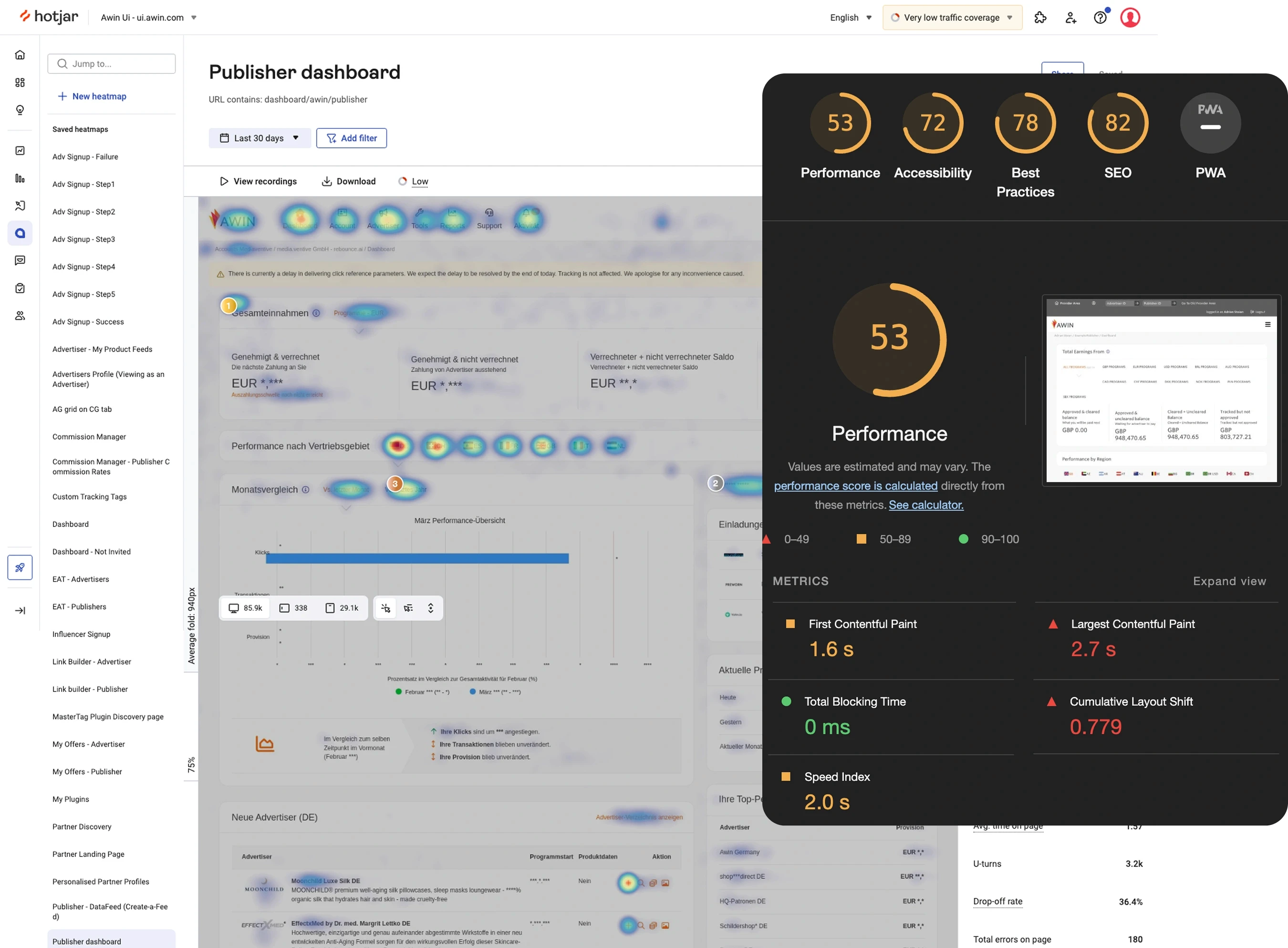
was to study real user behavior through Hotjar, Amplitude, and Lighthouse
was to study real user behavior through Hotjar, Amplitude, and Lighthouse
was to study real user behavior through Hotjar, Amplitude, and Lighthouse
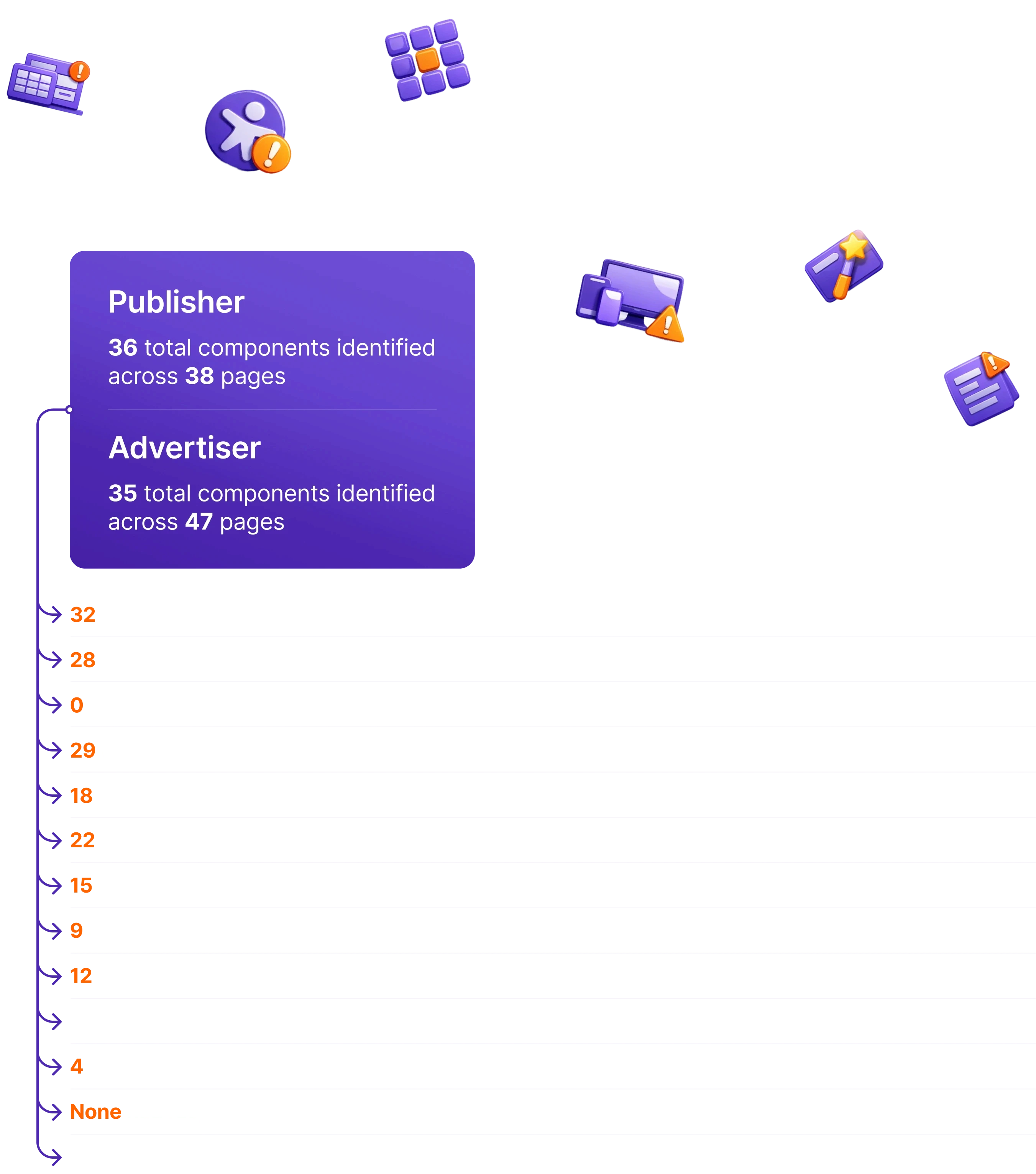
Low engagement on key pages. Users were not spending time where they were supposed to
Low engagement on key pages. Users were not spending time where they were supposed to
Users abandoned flows early due to unclear navigation paths
Users abandoned flows early due to unclear navigation paths
Multiple interaction patterns for the same action, causing confusion and inconsistent behavior.
Multiple interaction patterns for the same action, causing confusion and inconsistent behavior.
High rage-click zones on elements that looked actionable but weren’t
High rage-click zones on elements that looked actionable but weren’t
Heatmaps showed weak attention on primary CTAs, meaning the visual hierarchy wasn’t guiding users
Heatmaps showed weak attention on primary CTAs, meaning the visual hierarchy wasn’t guiding users
Mobile experience below acceptable standards, with elements too small or improperly spaced
Mobile experience below acceptable standards, with elements too small or improperly spaced
Incorrect focus order and missing ARIA labels, breaking accessibility for keyboard navigation
Incorrect focus order and missing ARIA labels, breaking accessibility for keyboard navigation
Scrolling behavior indicated content overload. Users skipped large sections entirely.
Scrolling behavior indicated content overload. Users skipped large sections entirely.
Very low color contrast, making core actions and text hard to read
Very low color contrast, making core actions and text hard to read
Buuuuut...
Buuuuut...
Buuuuut...
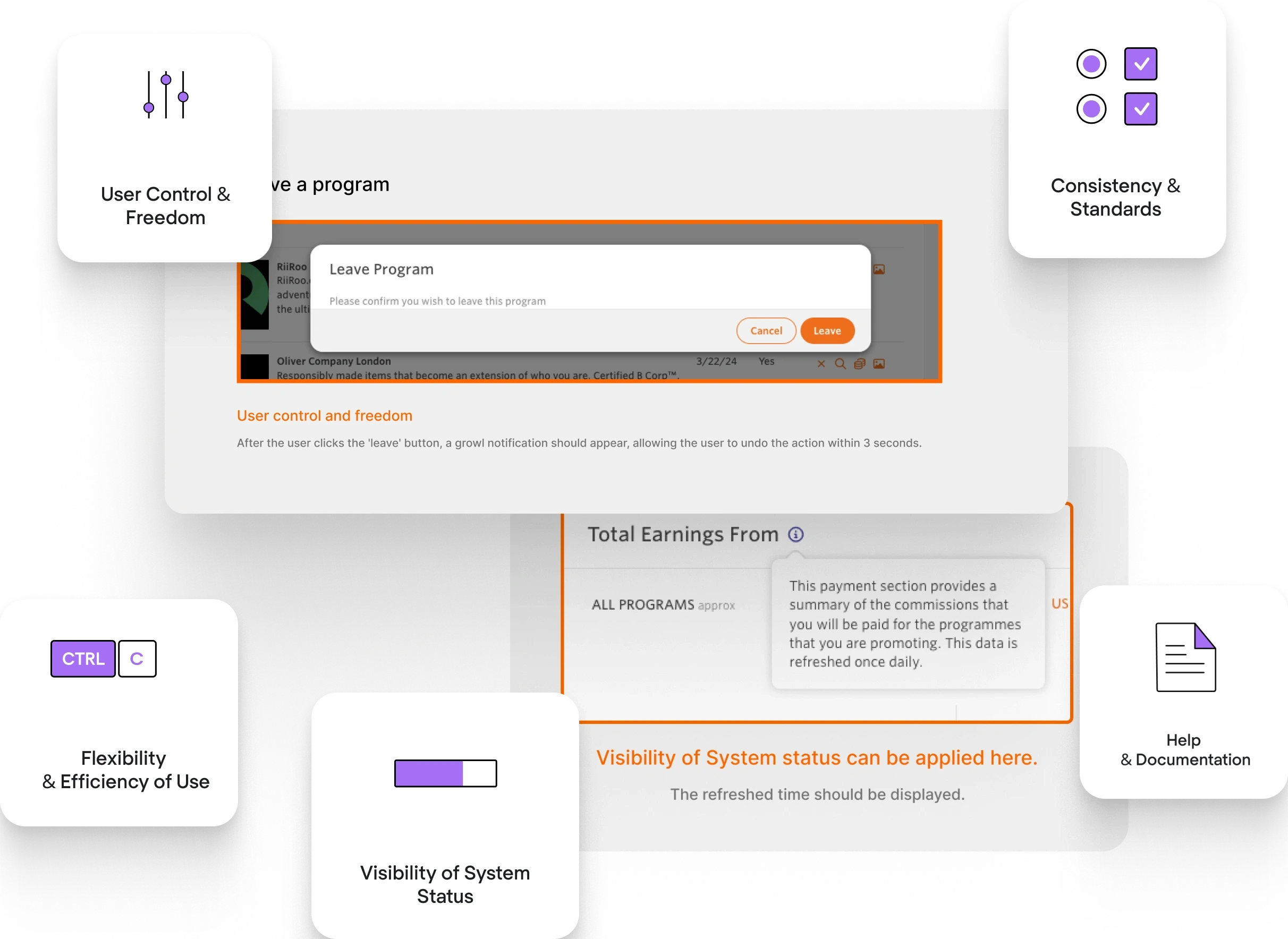
...to deepen the evaluation, I ran a full heuristic analysis using Jakob’s 10 usability principles. This helped me uncover usability issues that weren’t immediately visible through analytics alone.
...to deepen the evaluation, I ran a full heuristic analysis using Jakob’s 10 usability principles. This helped me uncover usability issues that weren’t immediately visible through analytics alone.
...to deepen the evaluation, I ran a full heuristic analysis using Jakob’s 10 usability principles. This helped me uncover usability issues that weren’t immediately visible through analytics alone.
Lack of system feedback after performing key tasks (no confirmation, no loading state, no success state)
Lack of system feedback after performing key tasks (no confirmation, no loading state, no success state)
Consistency and standards (different modules behaving differently)
Consistency and standards (different modules behaving differently)
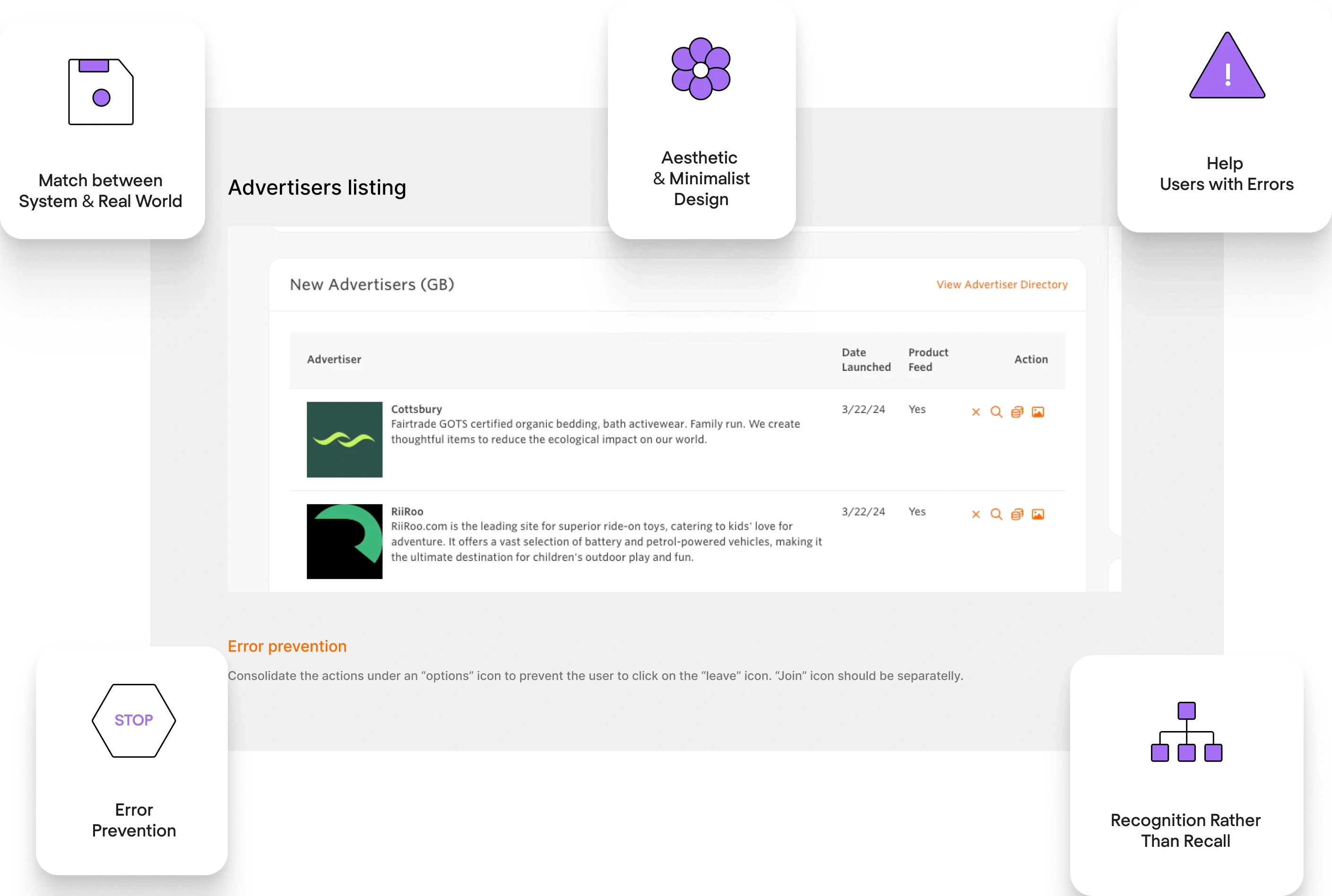
Error prevention (no guardrails, misleading interactions)
Error prevention (no guardrails, misleading interactions)
Error messages were either missing or unclear, giving users no way to understand what went wrong or how to recover.
Error messages were either missing or unclear, giving users no way to understand what went wrong or how to recover.
Consistency and standards (different modules behaving differently)
Consistency and standards (different modules behaving differently)
Important actions were hidden behind ambiguous icons, forcing users to guess their meaning.
Important actions were hidden behind ambiguous icons, forcing users to guess their meaning.
Interruptive modal dialogs appeared in flows where users expected inline interactions, causing context loss.
Interruptive modal dialogs appeared in flows where users expected inline interactions, causing context loss.
No visibility on system status during long processes, making the platform feel frozen or unresponsive.
No visibility on system status during long processes, making the platform feel frozen or unresponsive.
Keyboard navigation was nearly impossible, due to missing focus states and broken tab order.
Keyboard navigation was nearly impossible, due to missing focus states and broken tab order.
Destructive actions (delete, remove, unlink) were styled too similarly to neutral actions, causing risk of accidental data loss.
Destructive actions (delete, remove, unlink) were styled too similarly to neutral actions, causing risk of accidental data loss.
Search inputs had no empty or error state, leaving users unsure if results were loading, empty, or broken.
Search inputs had no empty or error state, leaving users unsure if results were loading, empty, or broken.
Same interaction (expand, open, edit) had different behaviors depending on the module, forcing users to relearn patterns endlessly.
Same interaction (expand, open, edit) had different behaviors depending on the module, forcing users to relearn patterns endlessly.
Competitor Analysis
Competitor Analysis
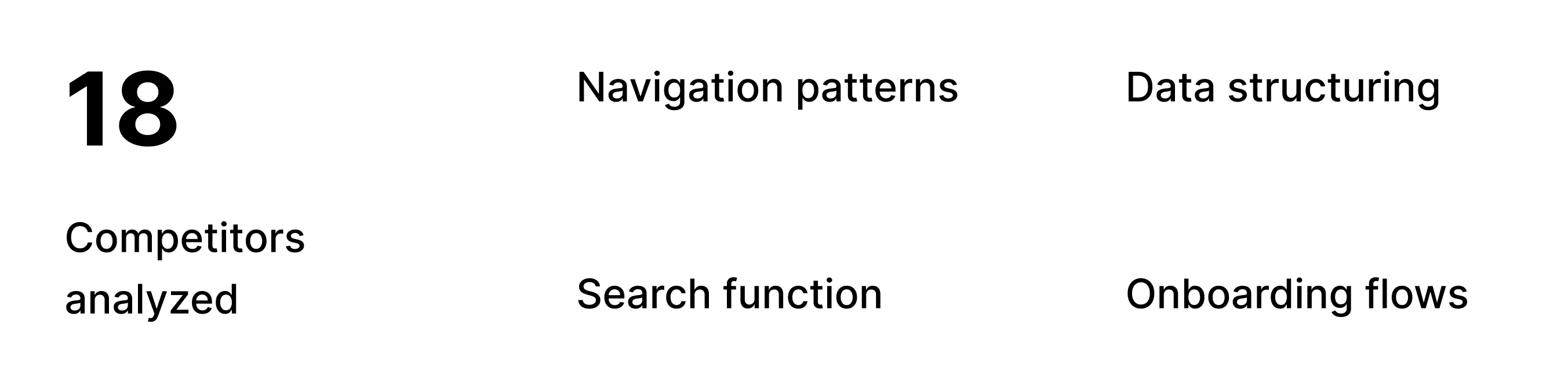
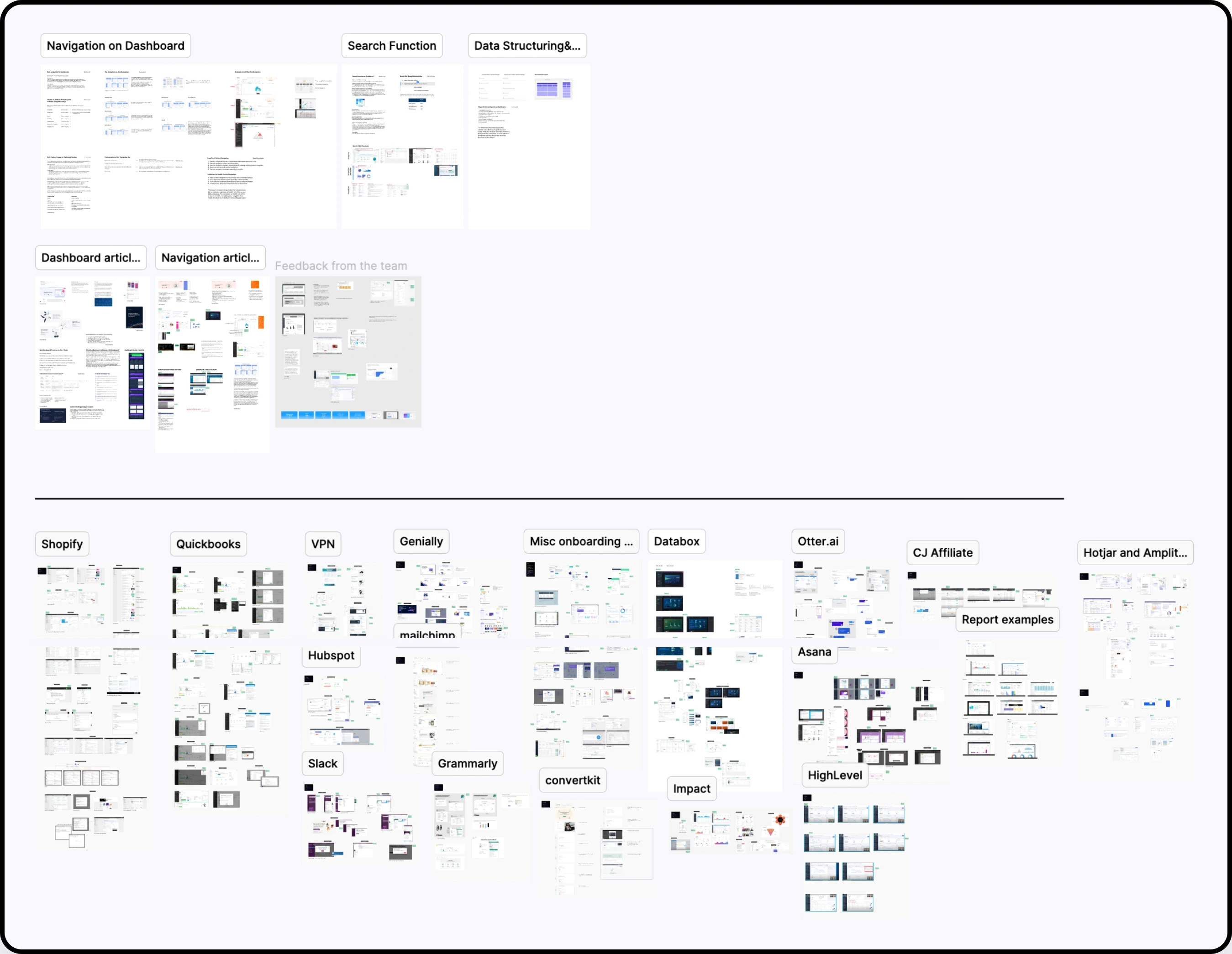
I analyzed leading SaaS platforms to identify the best practices in the industry, focusing on interaction patterns, navigation models, component behavior, accessibility standards, and responsive design.
These insights helped me validate decisions, refine the Design System structure, and ensure that the redesigned platform aligned with modern enterprise expectations.
I analyzed leading SaaS platforms to identify the best practices in the industry, focusing on interaction patterns, navigation models, component behavior, accessibility standards, and responsive design.
These insights helped me validate decisions, refine the Design System structure, and ensure that the redesigned platform aligned with modern enterprise expectations.
User testing
User testing
#2nd session
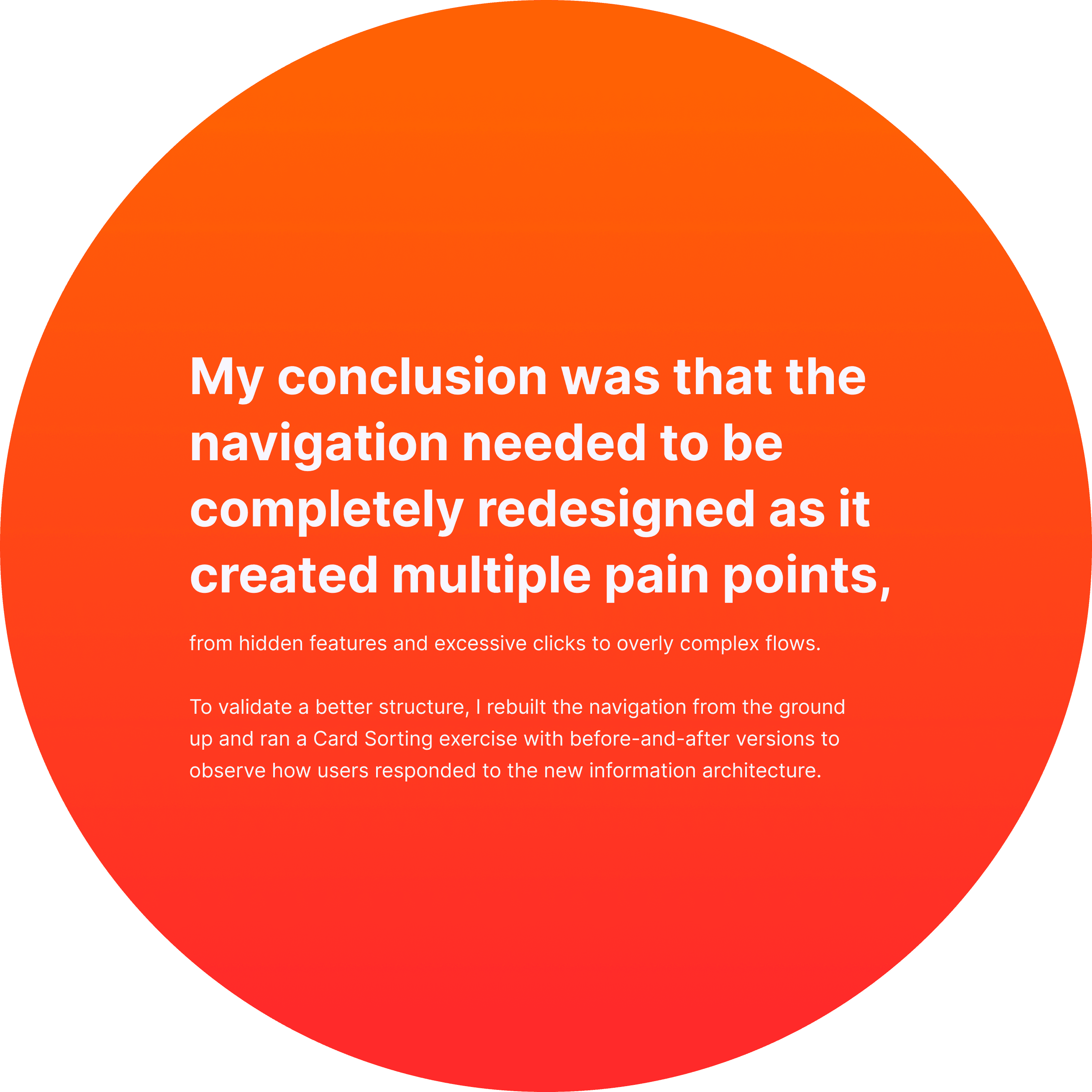
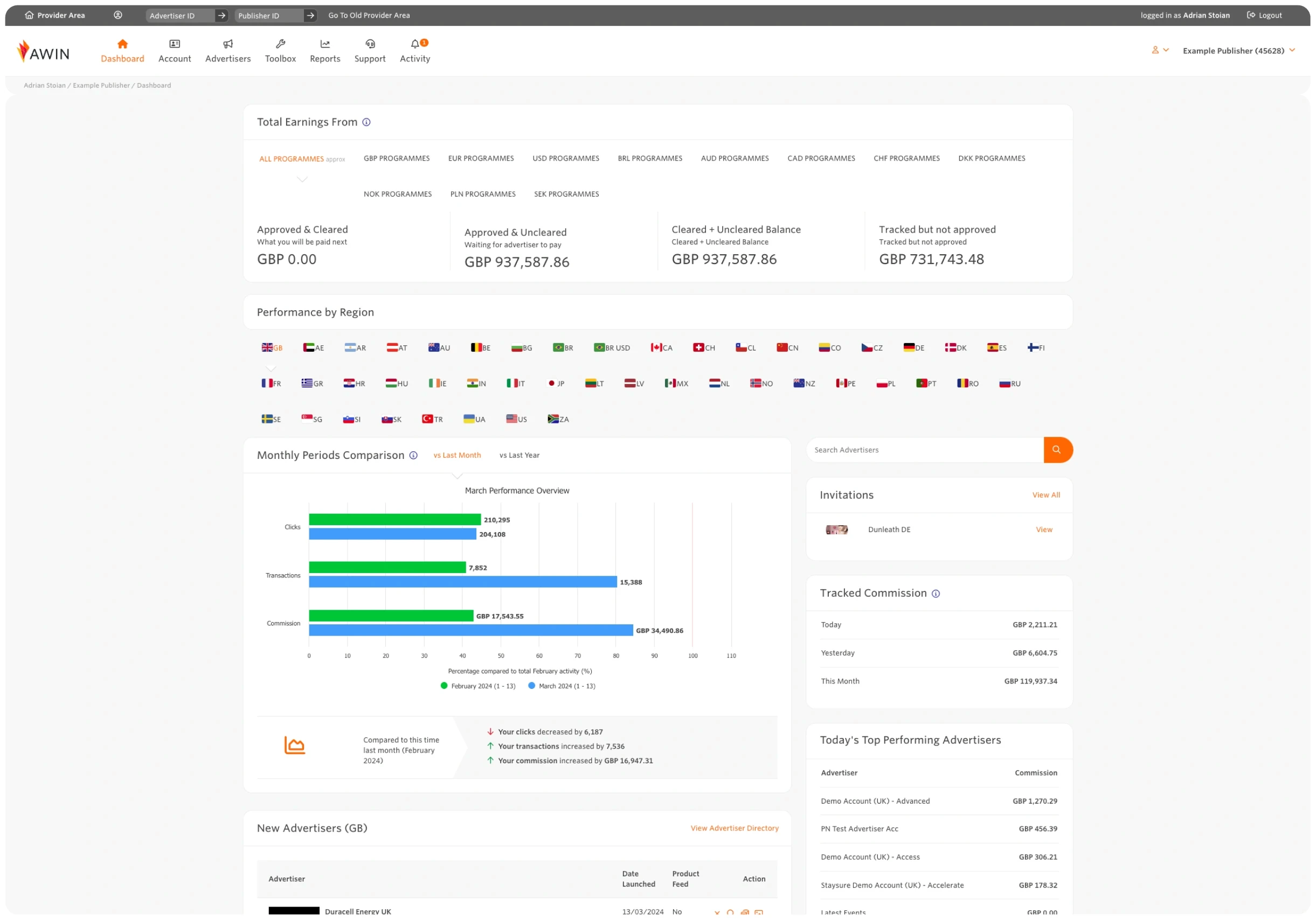
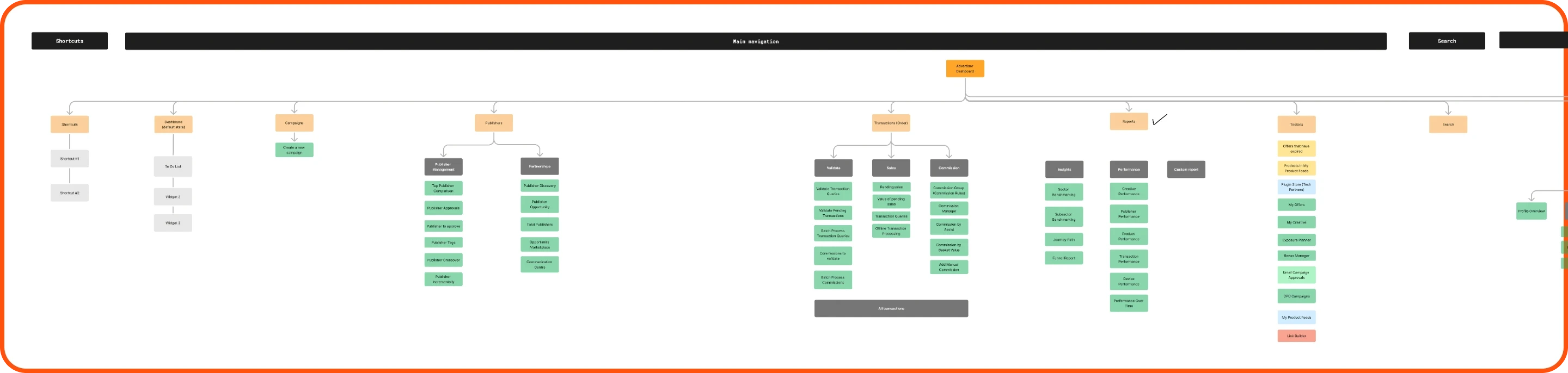
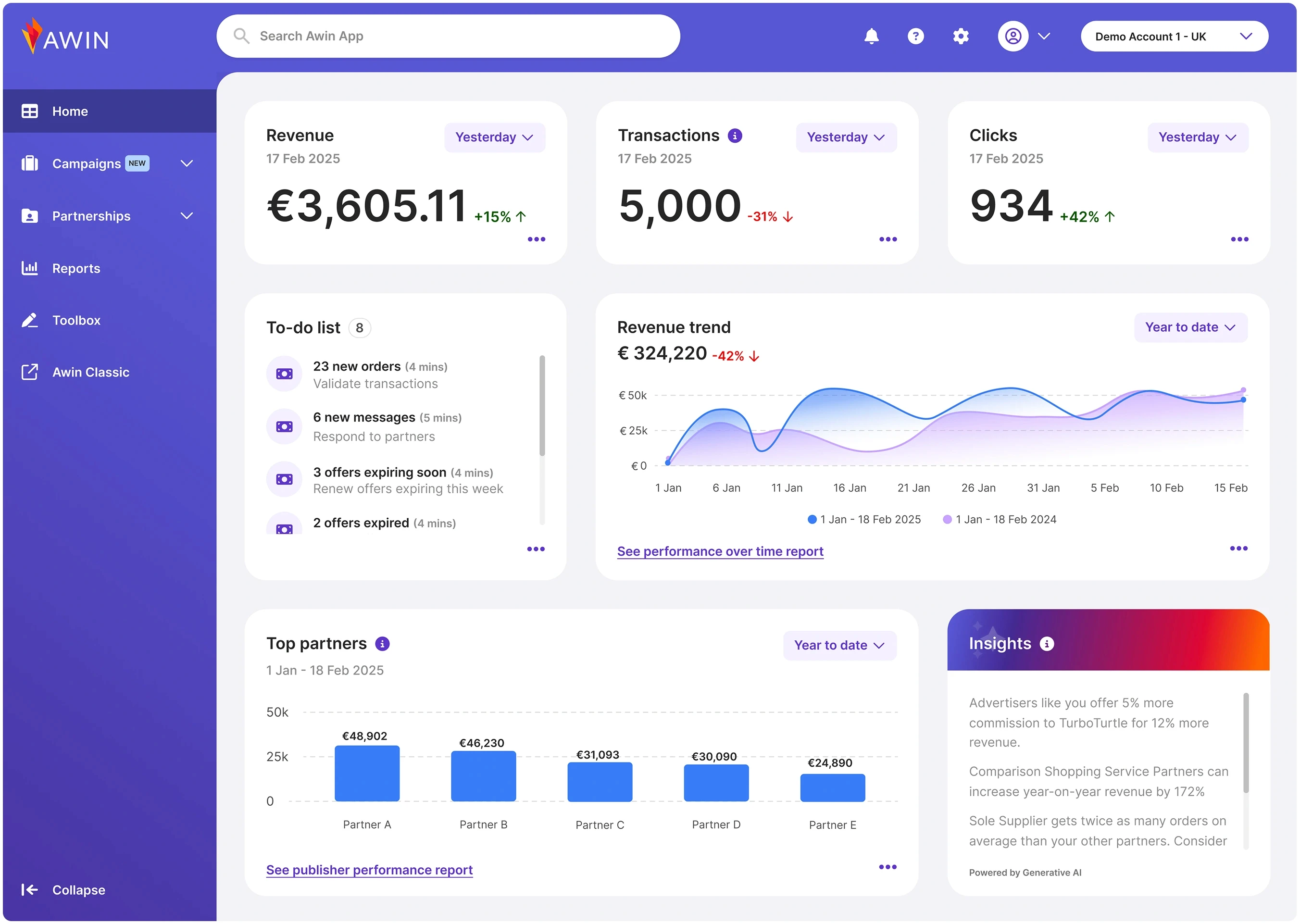
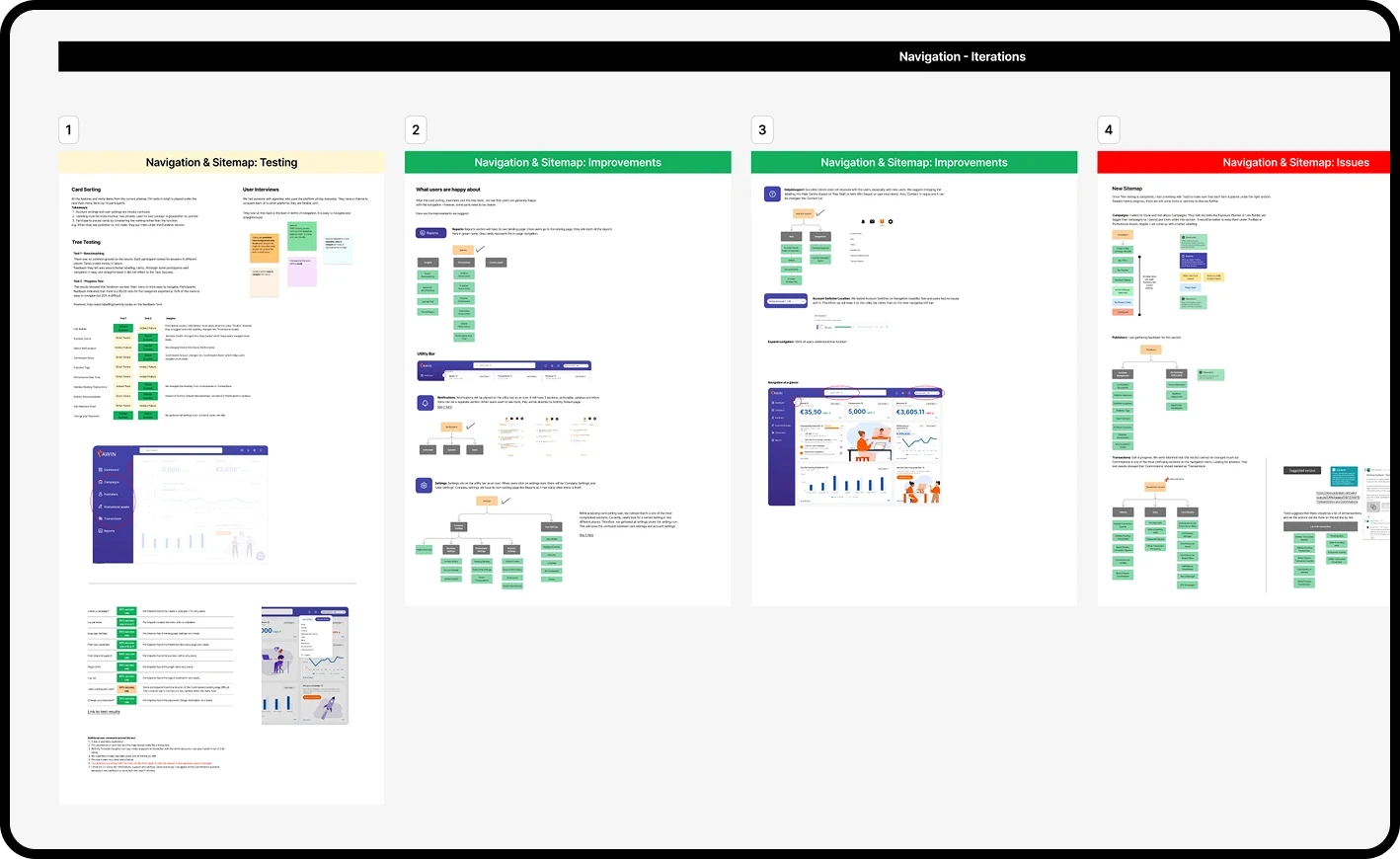
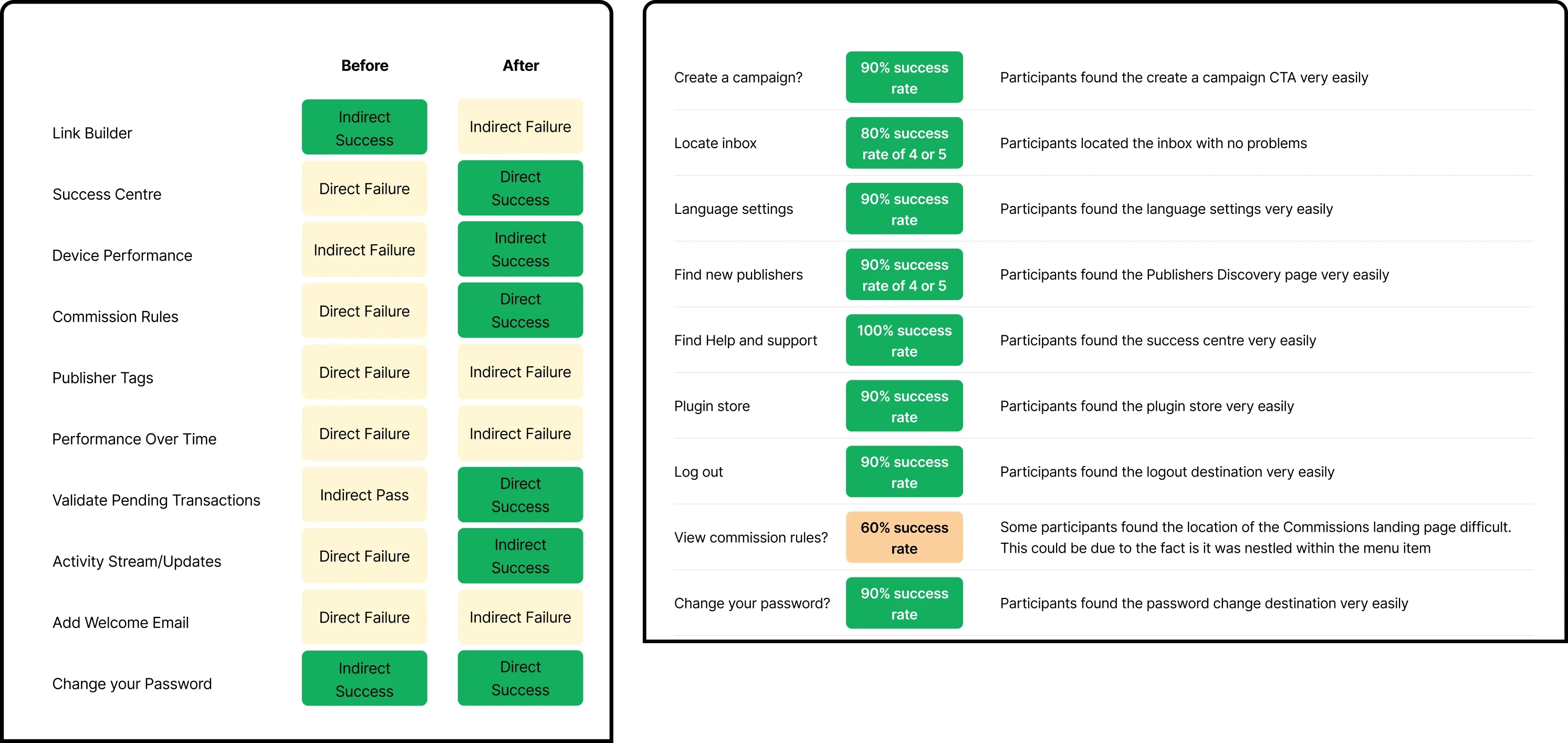
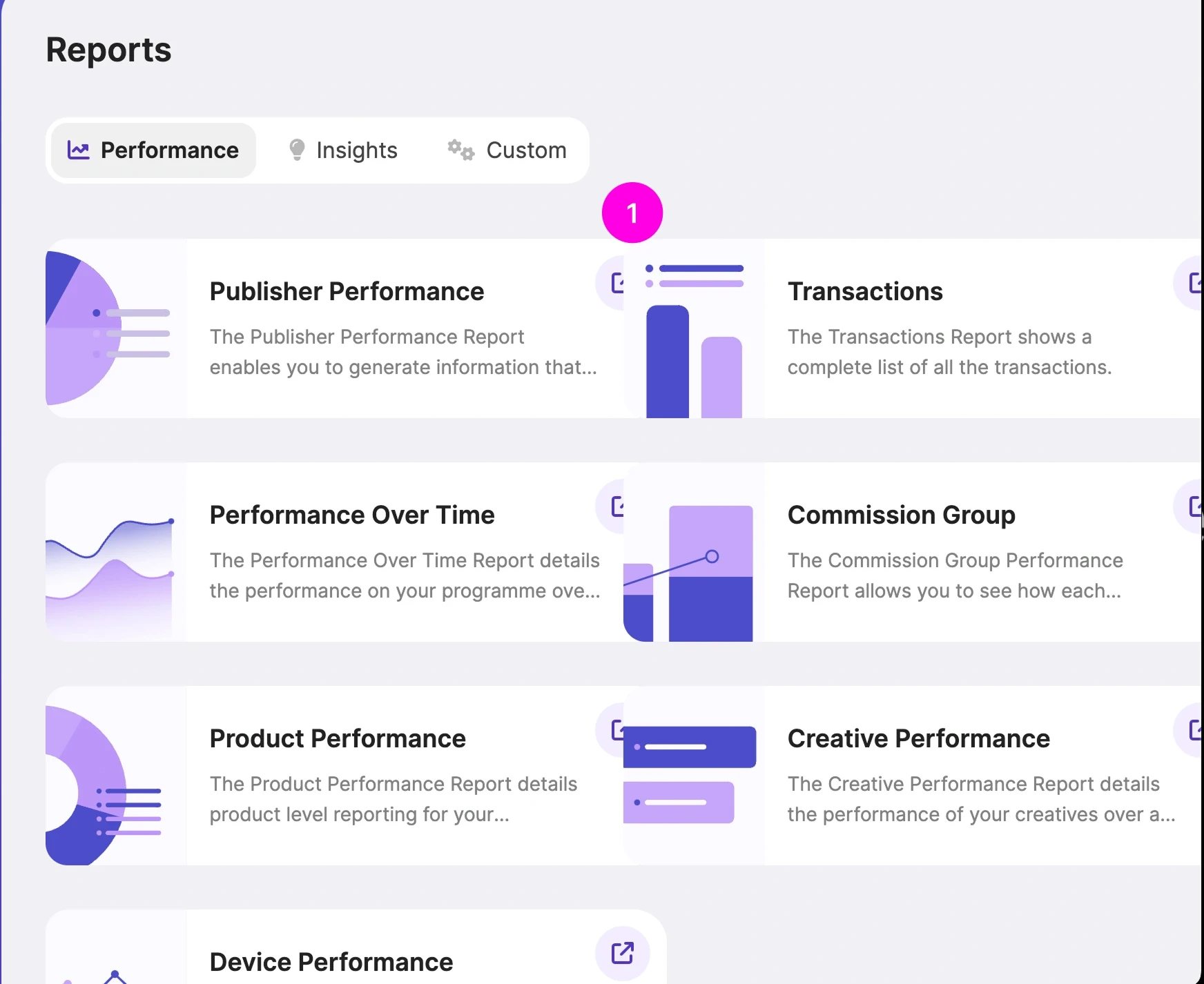
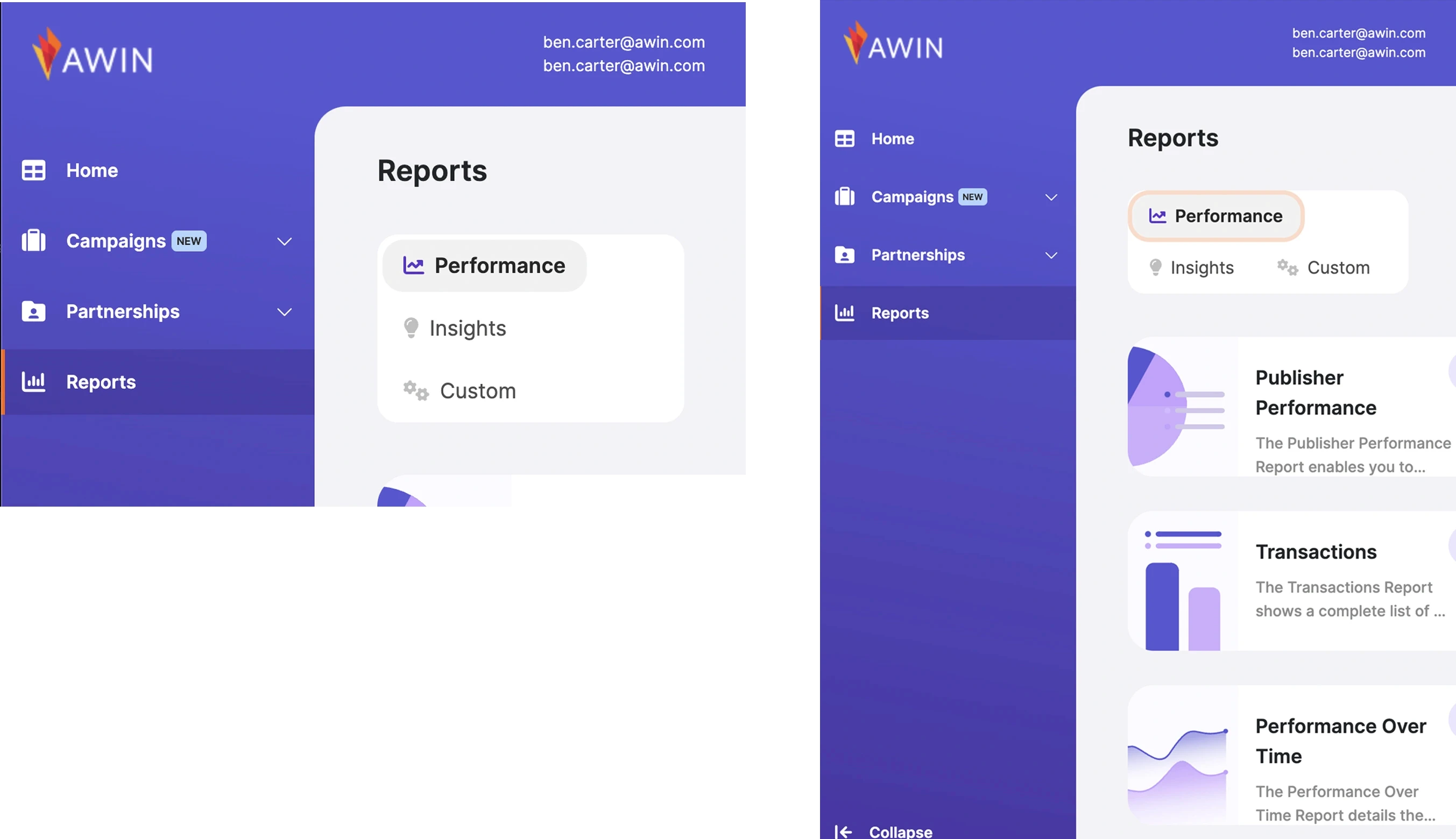
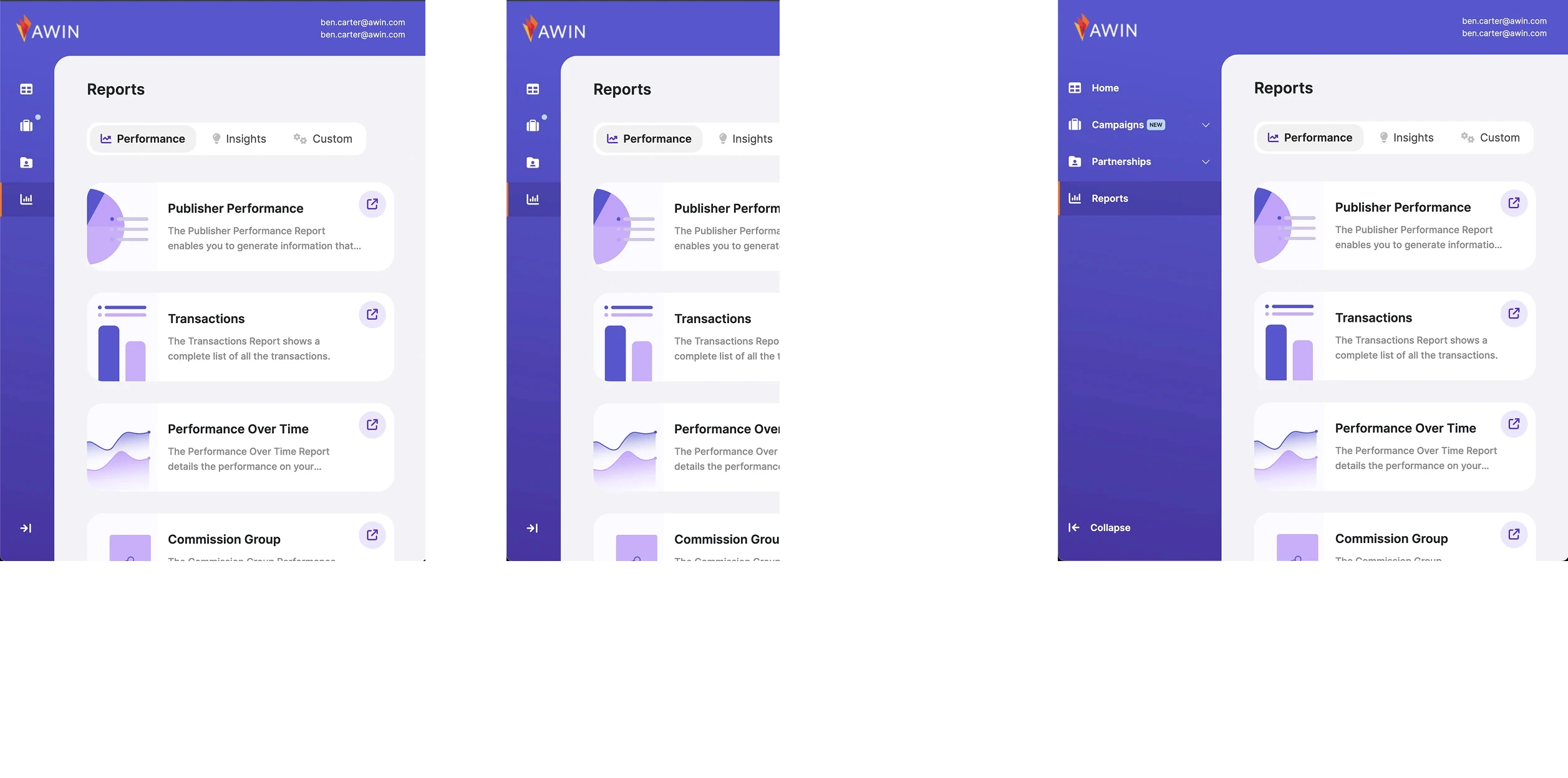
After redefining the navigation structure from scratch, I ran an online workshop with 14 users using Card Sorting, Tree Testing, and User Interviews to validate the ‘before’ and ‘after’ versions.
After redefining the navigation structure from scratch, I ran an online workshop with 14 users using Card Sorting, Tree Testing, and User Interviews to validate the ‘before’ and ‘after’ versions.
After redefining the navigation structure from scratch, I ran an online workshop with 14 users using Card Sorting, Tree Testing, and User Interviews to validate the ‘before’ and ‘after’ versions.
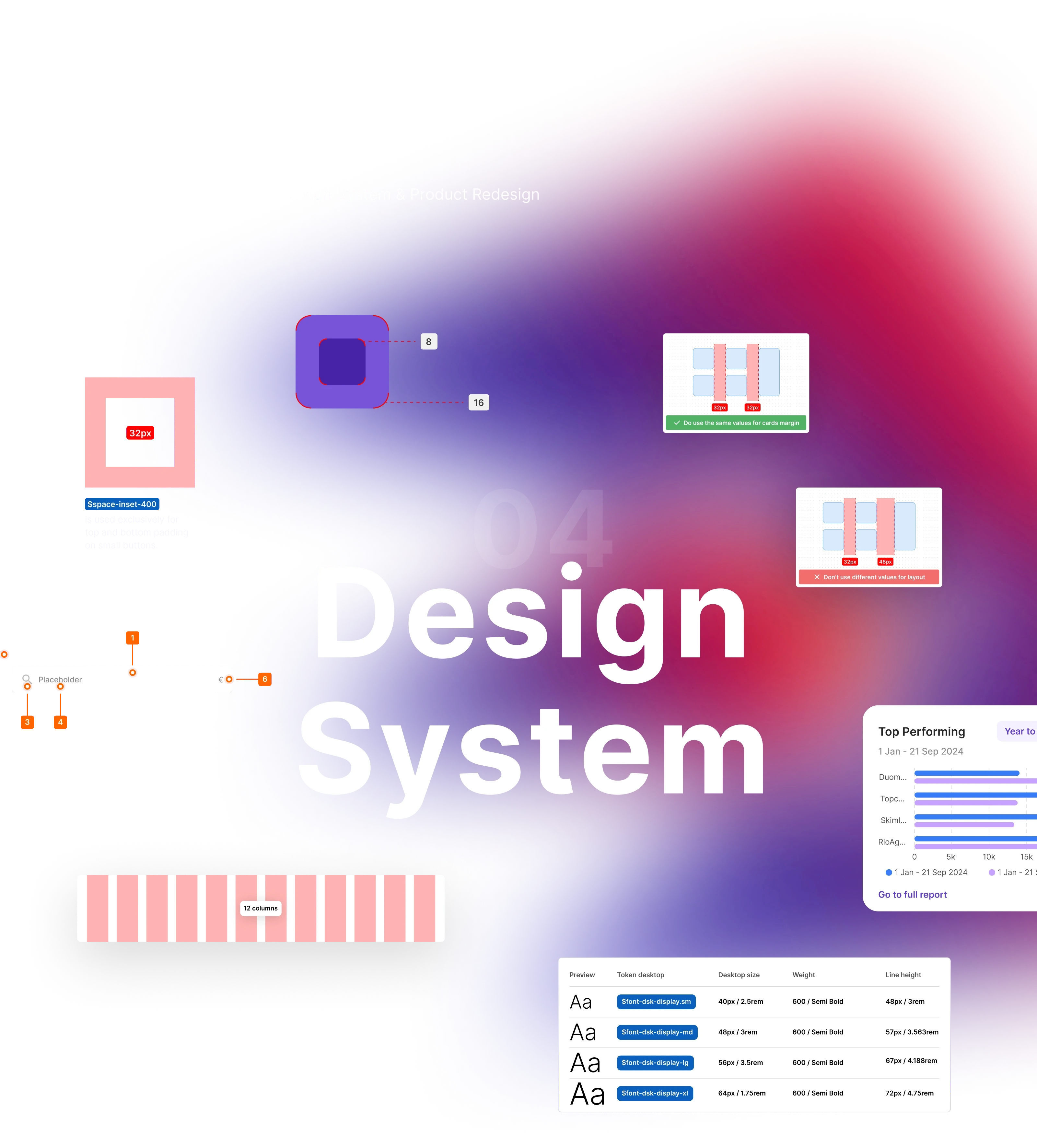
Atomic
Design System
Atomic
Design System
Atomic
Design System
Tokens
Tokens
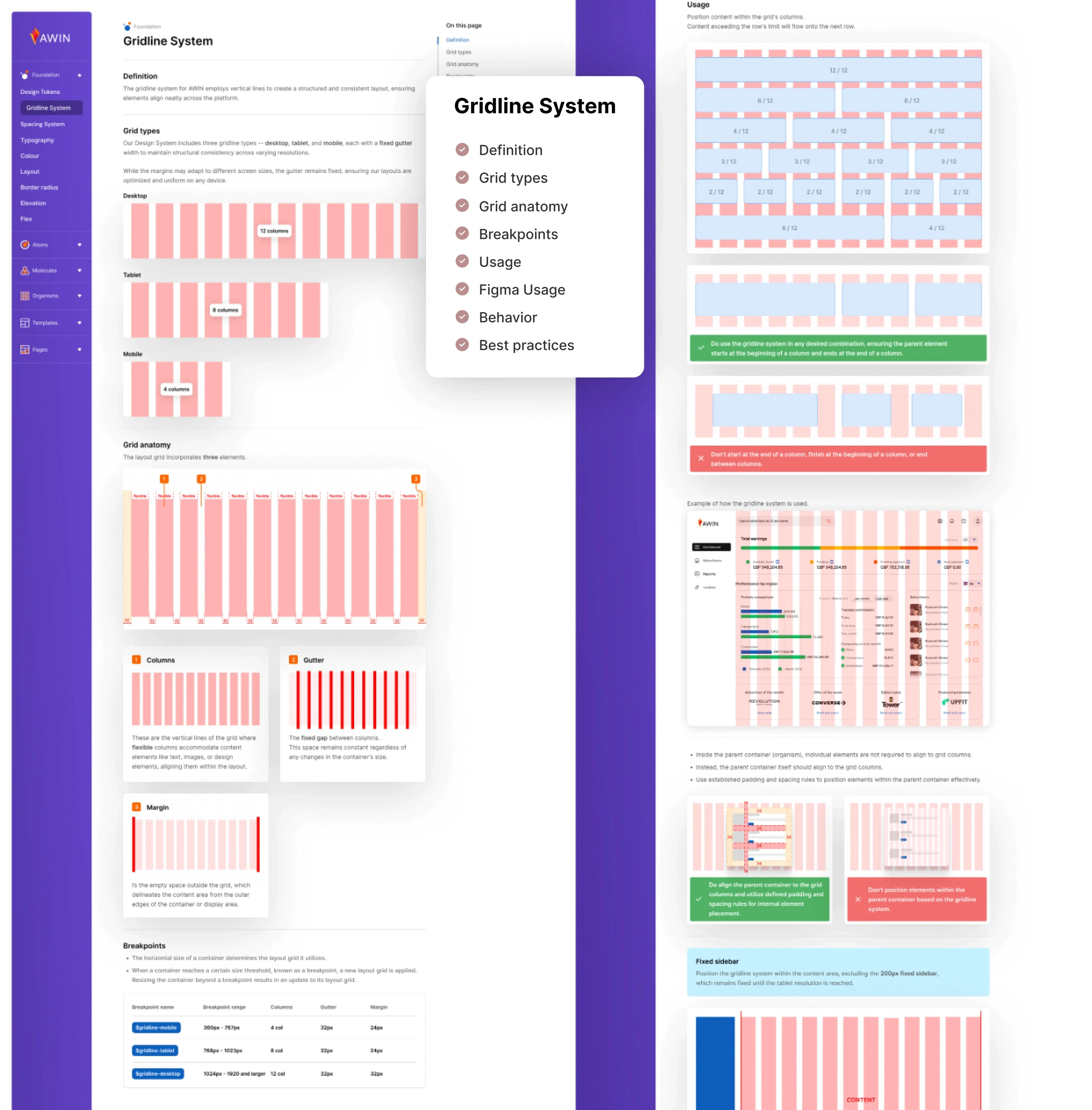
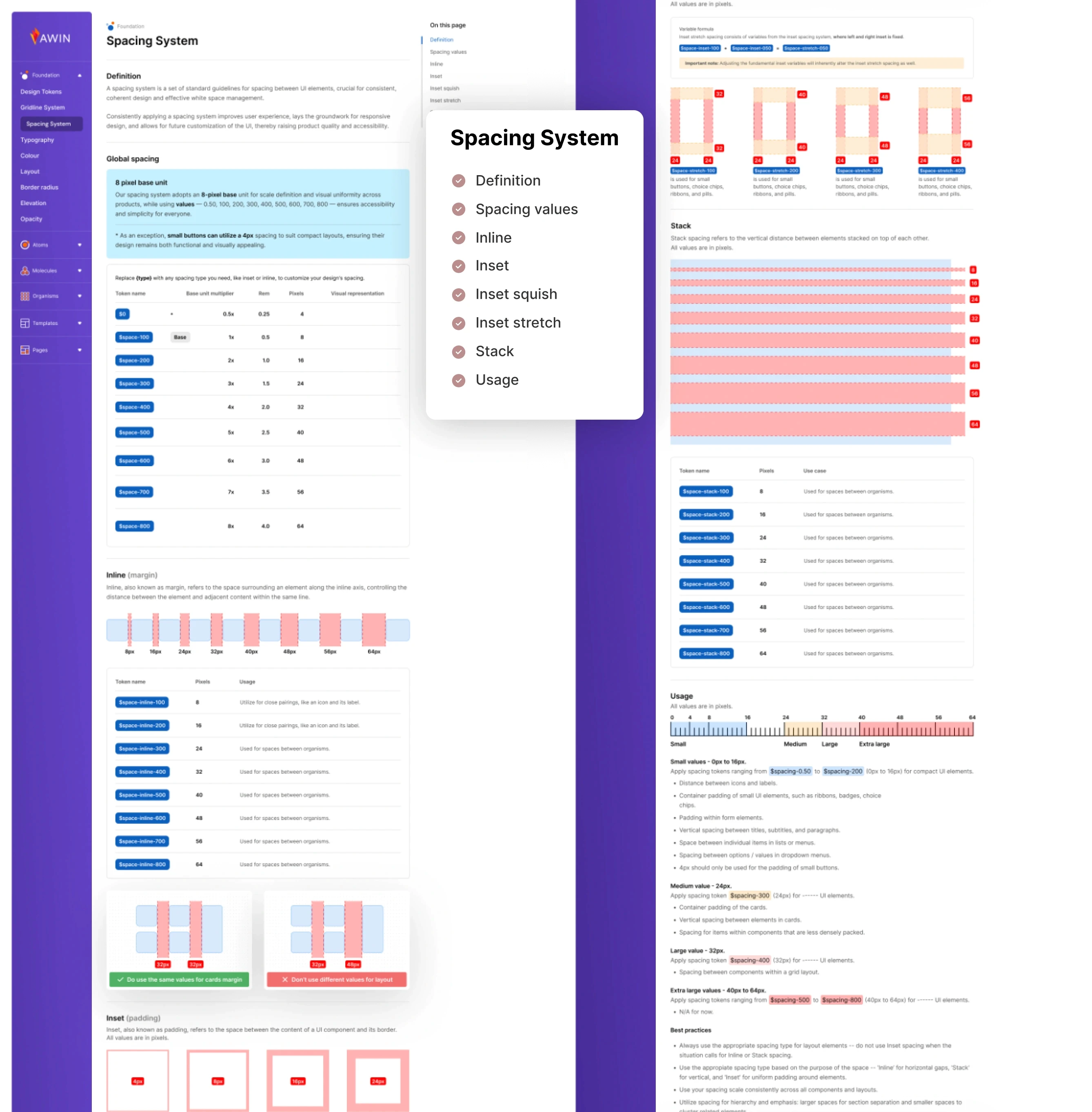
Gridline system
Gridline system
Gridline system
Gridline system
Gridline system
Gridline system
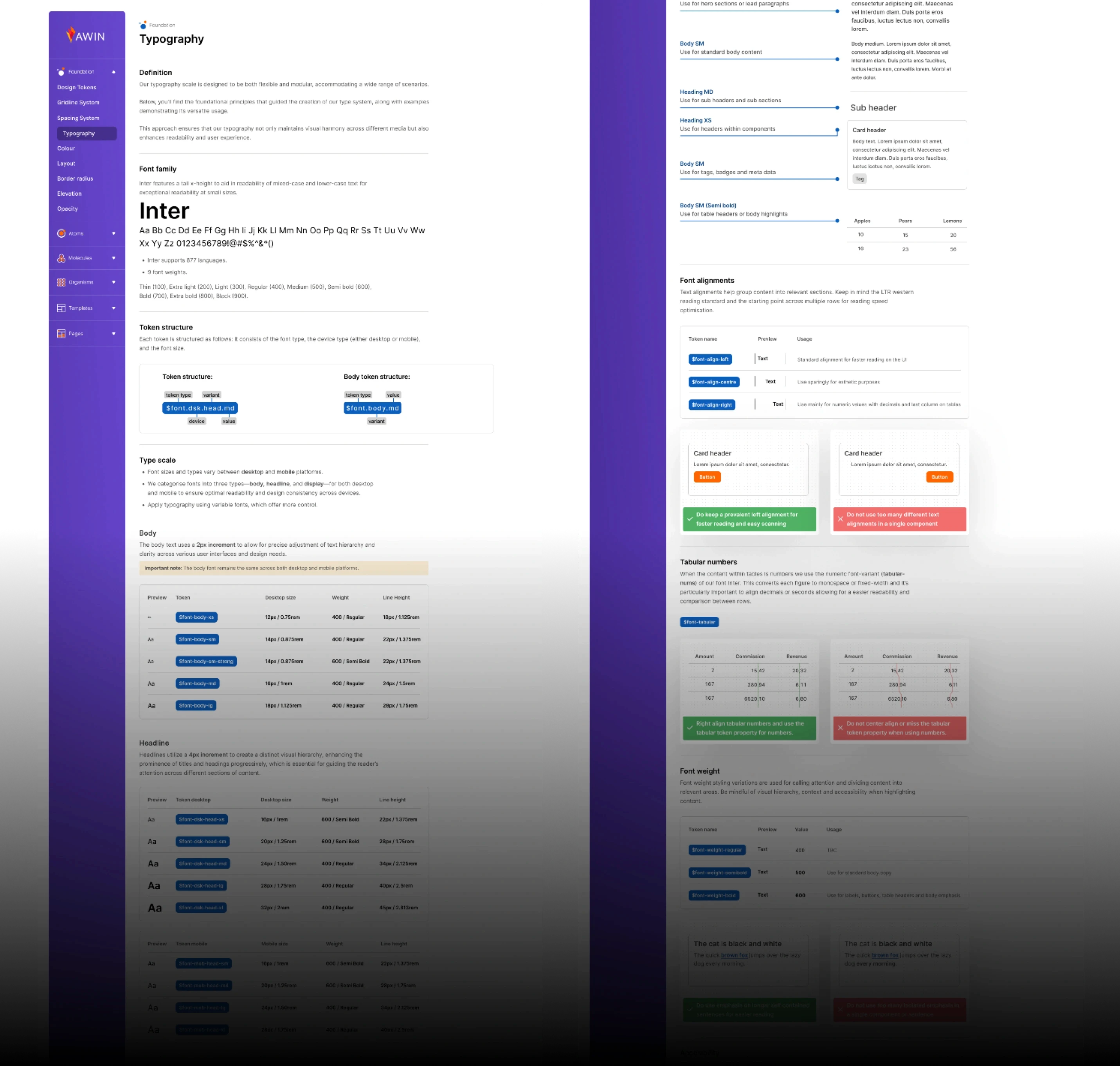
Typography scale
Typography scale
Typography scale
Color system
Color system
Color system
Border radius
Border radius
Border radius
Shadow level
Shadow level
Shadow level
Iconography
Iconography
Iconography
Atoms
Atoms
Atoms
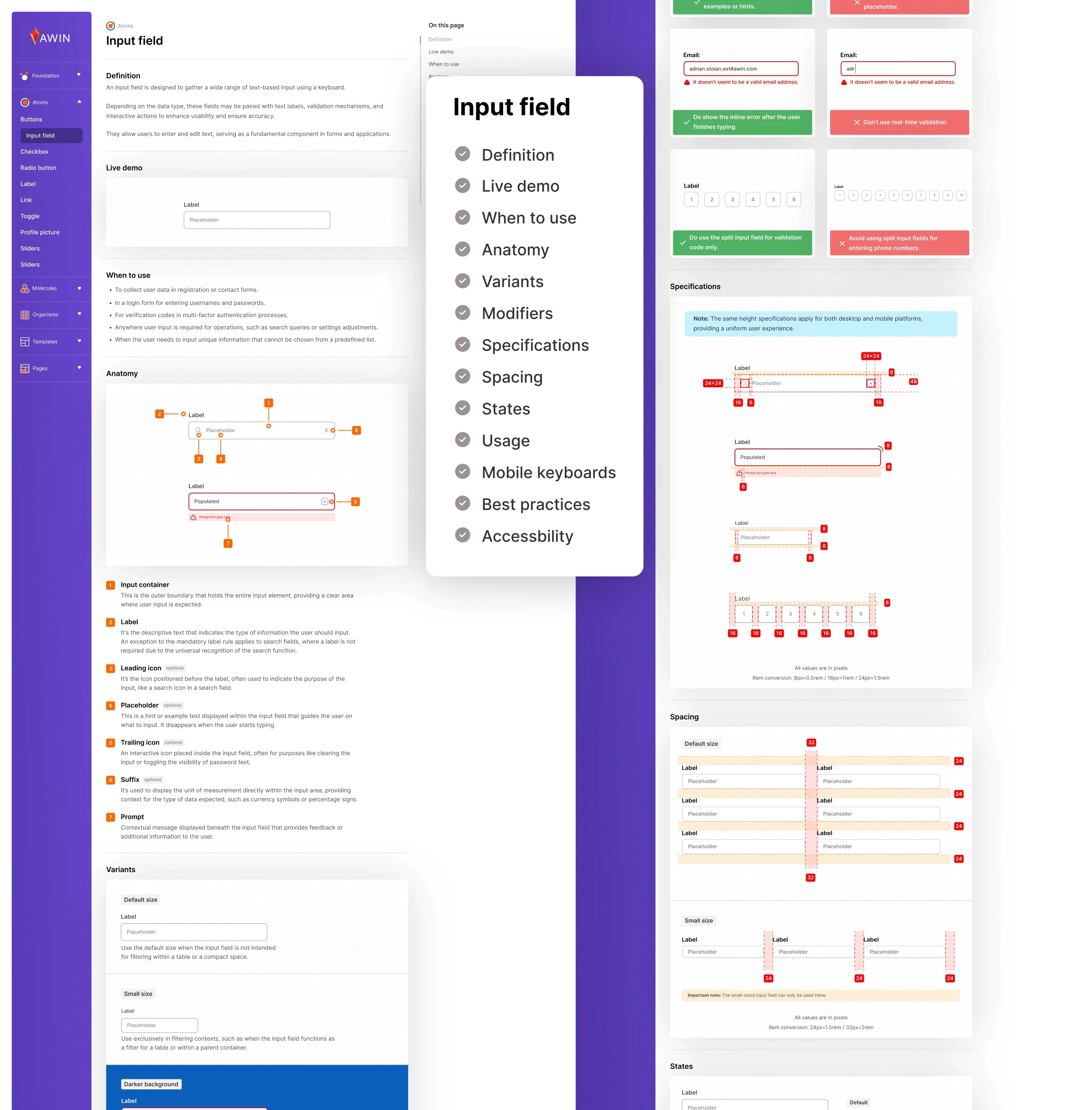
Input fields
Input fields
Input fields
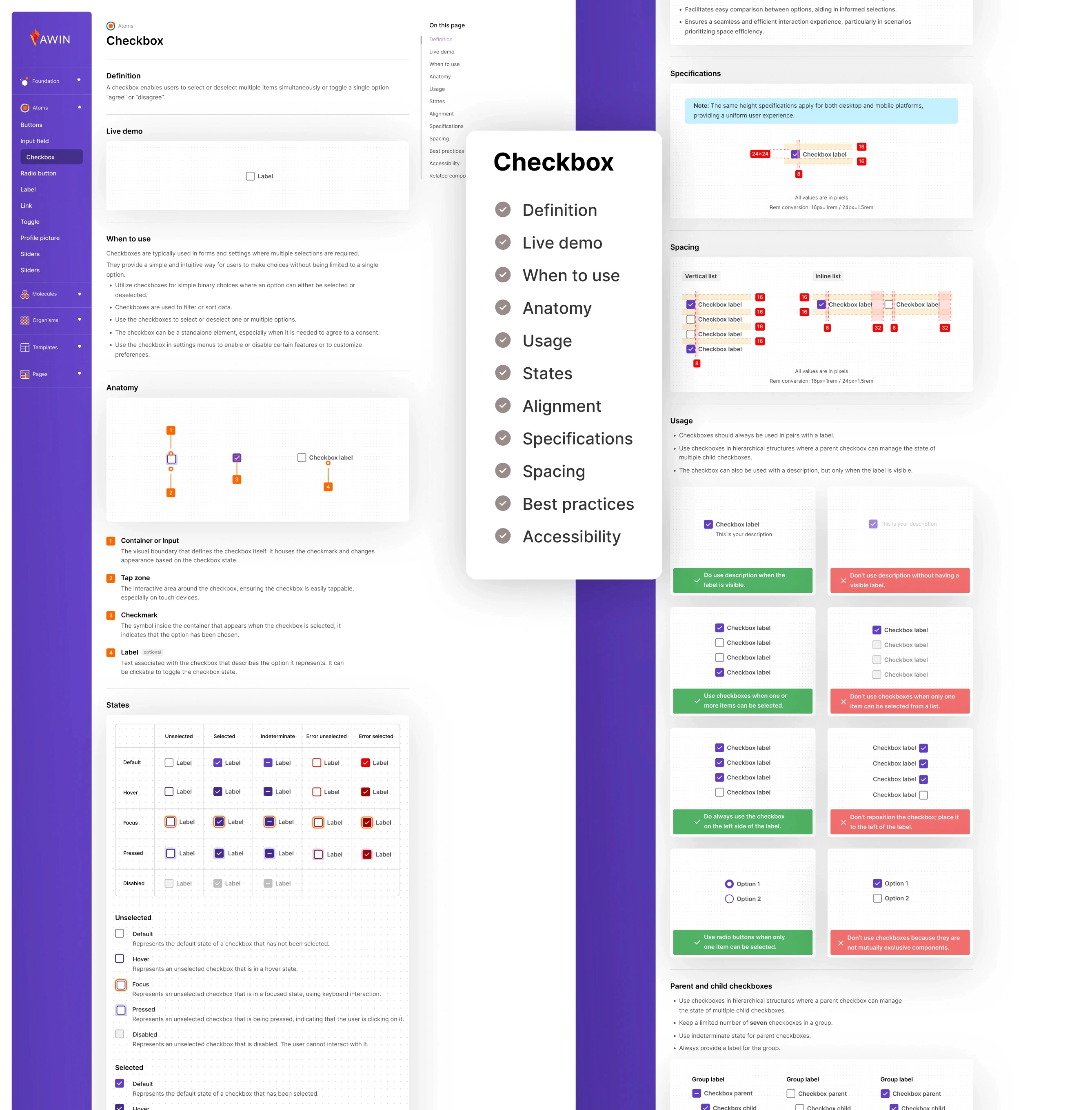
Checkbox
Checkbox
Checkbox
Radio button
Radio button
Radio button
Toggle
Toggle
Toggle
Buttons
Buttons
Buttons
Textarea
Textarea
Textarea
Link
Link
Link
label
label
label
Avatars
Avatars
Avatars
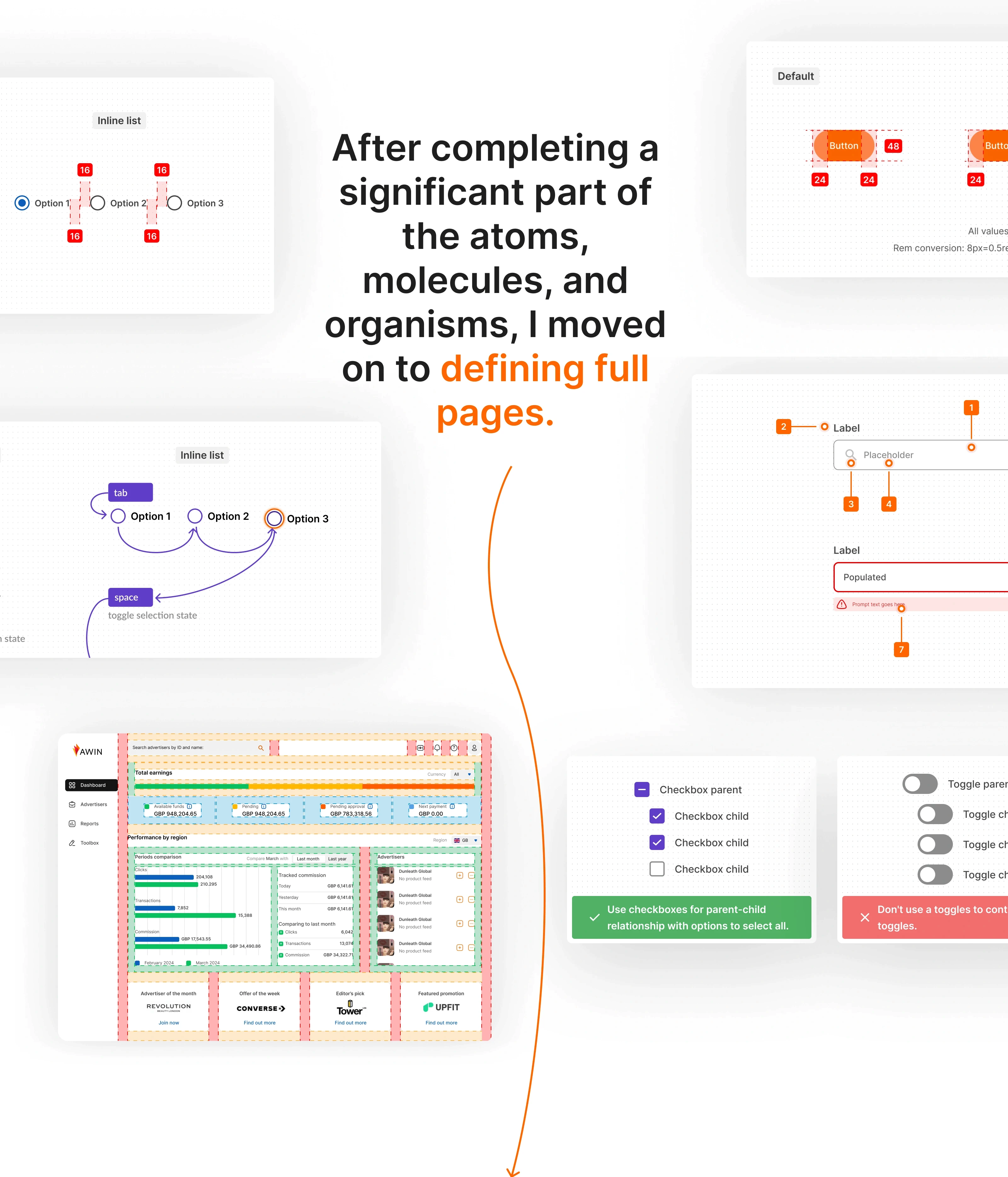
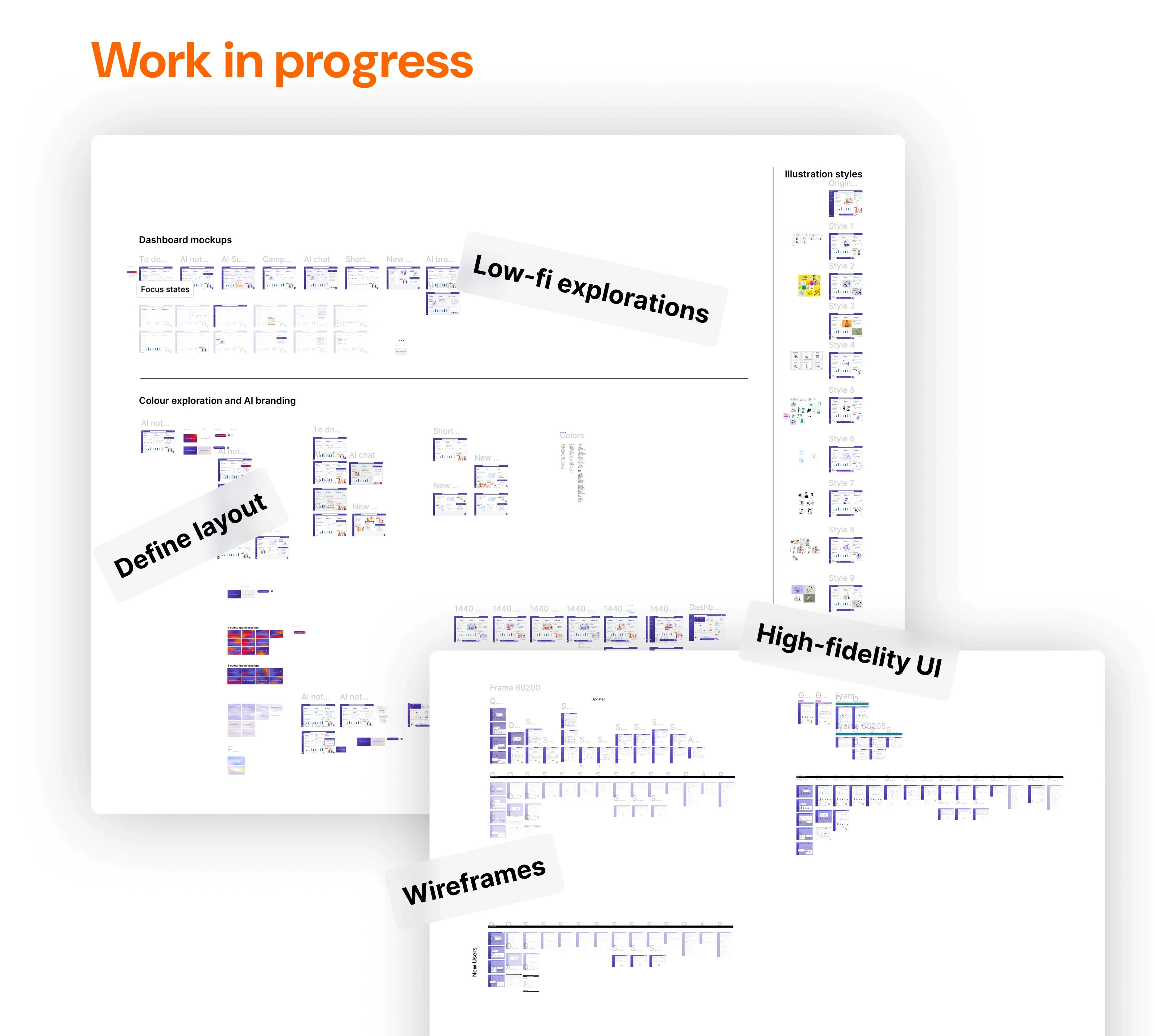
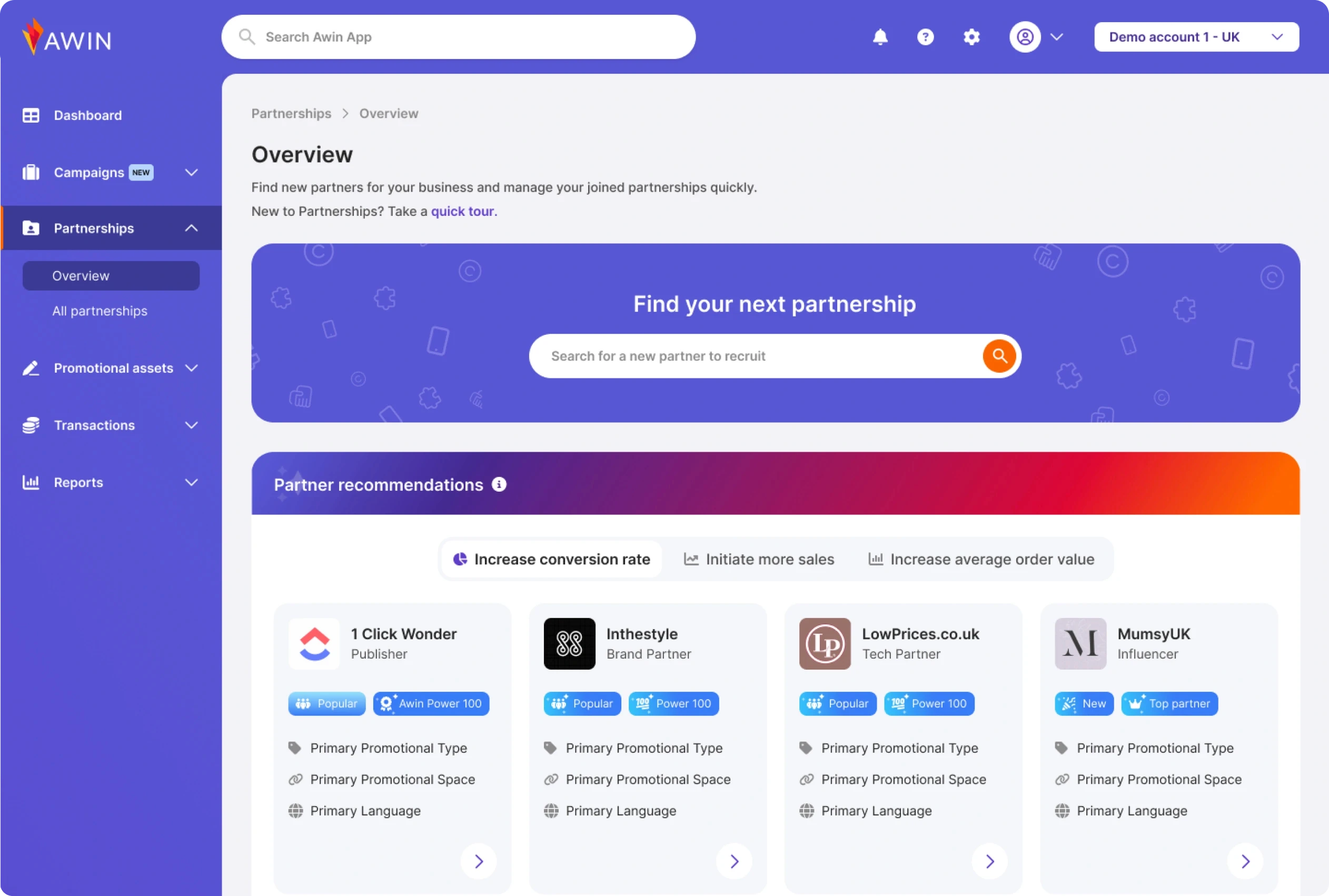
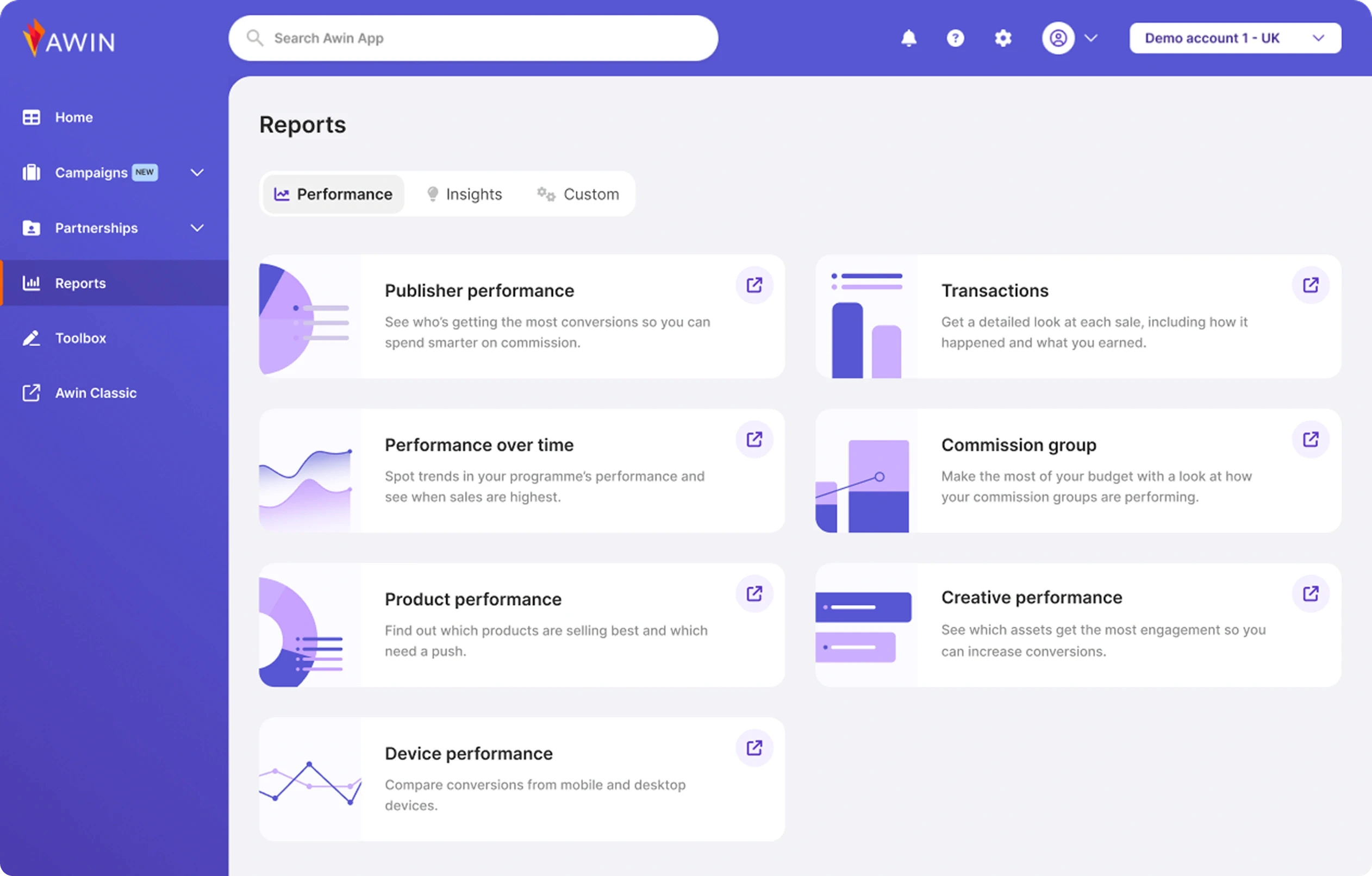
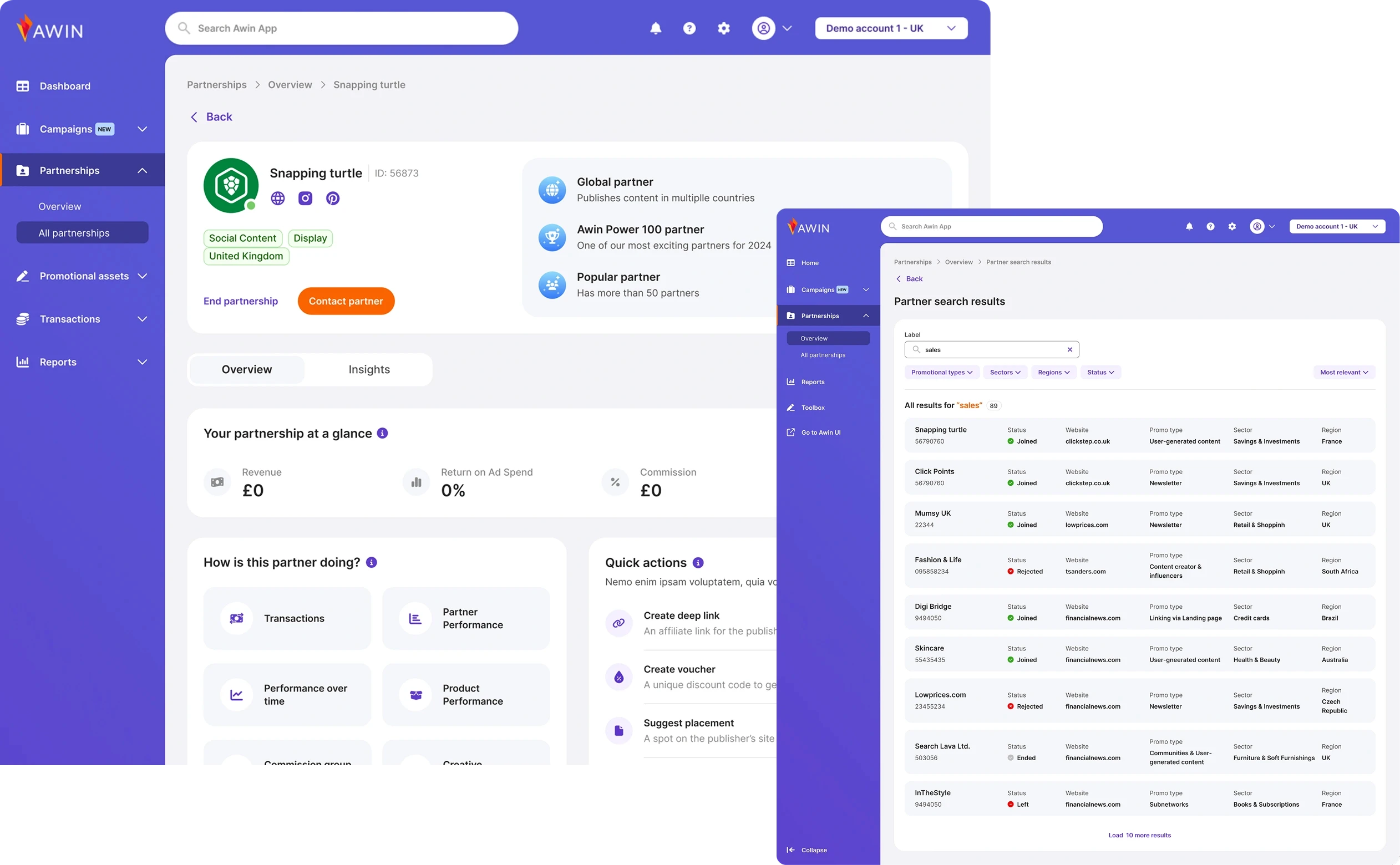
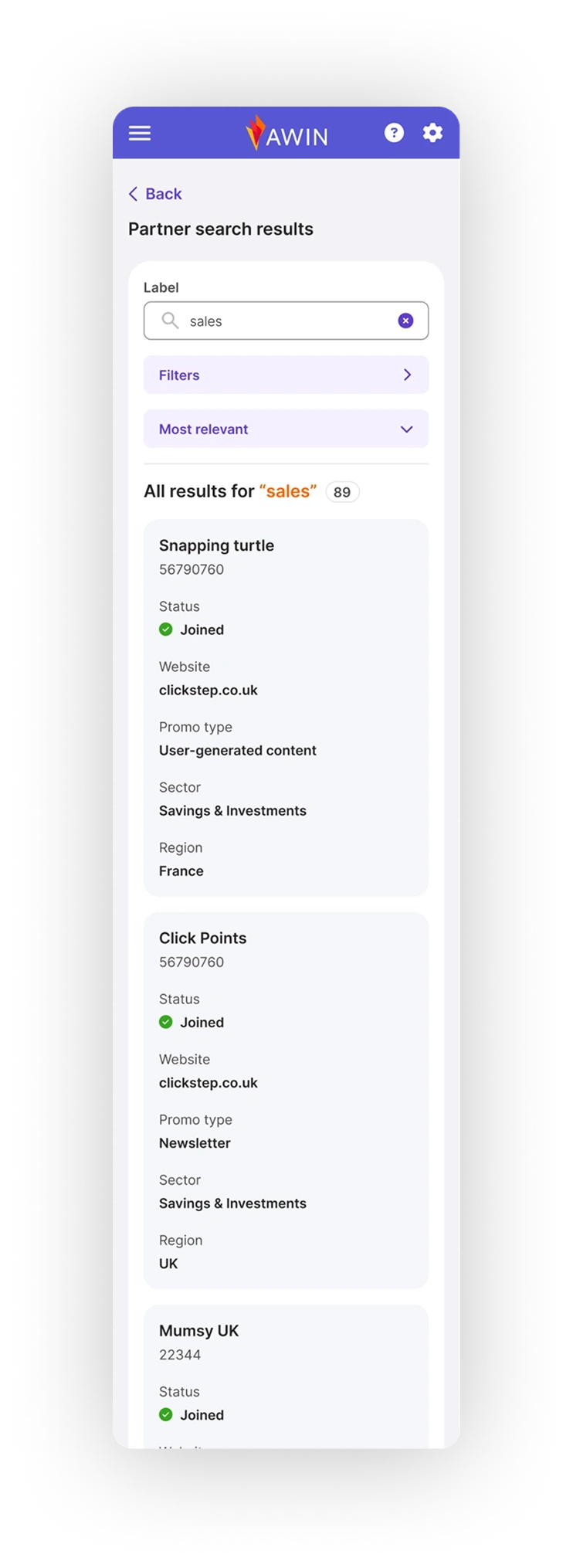
...so I started with the most critical areas of the product:
...so I started with the most critical areas of the product:
...so I started with the most critical areas of the product:
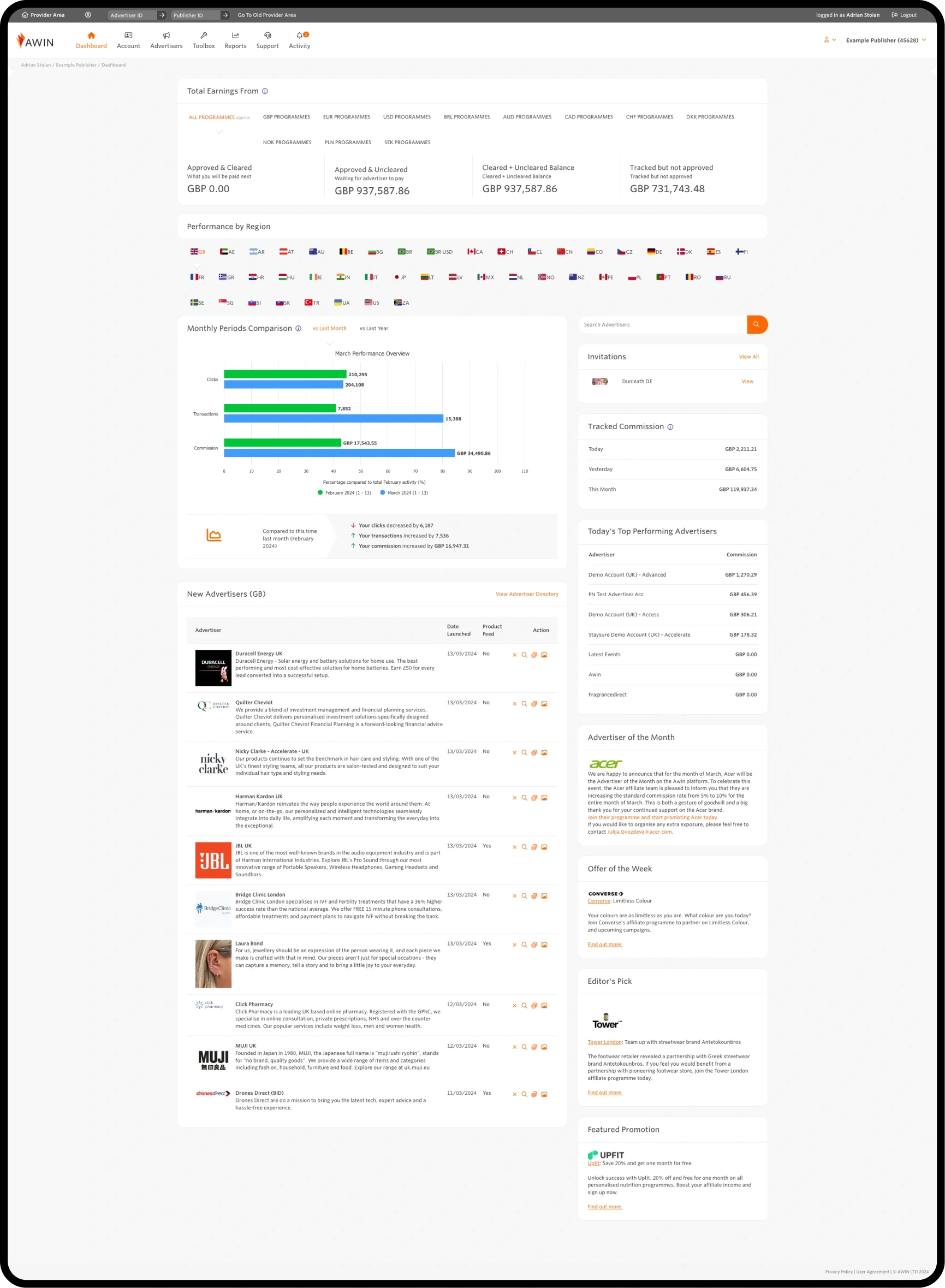
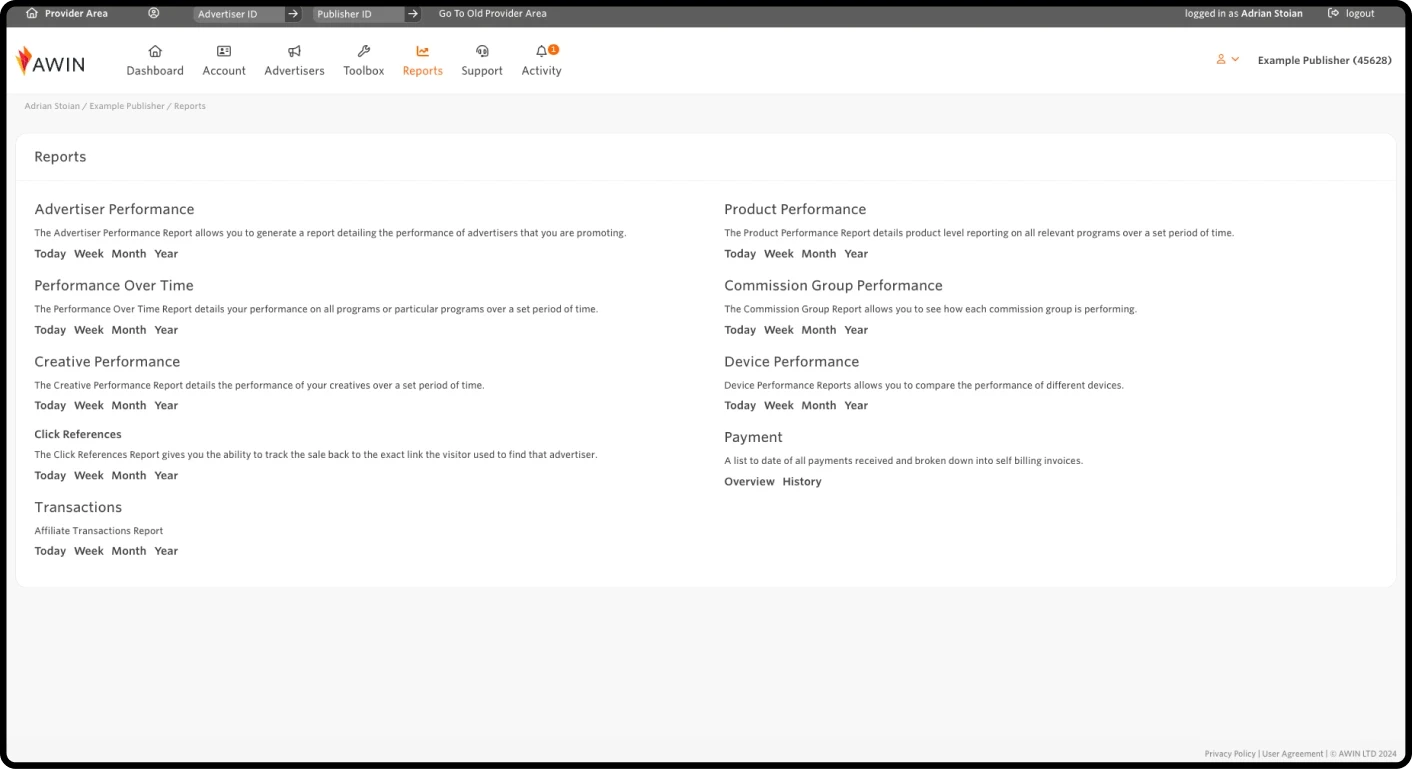
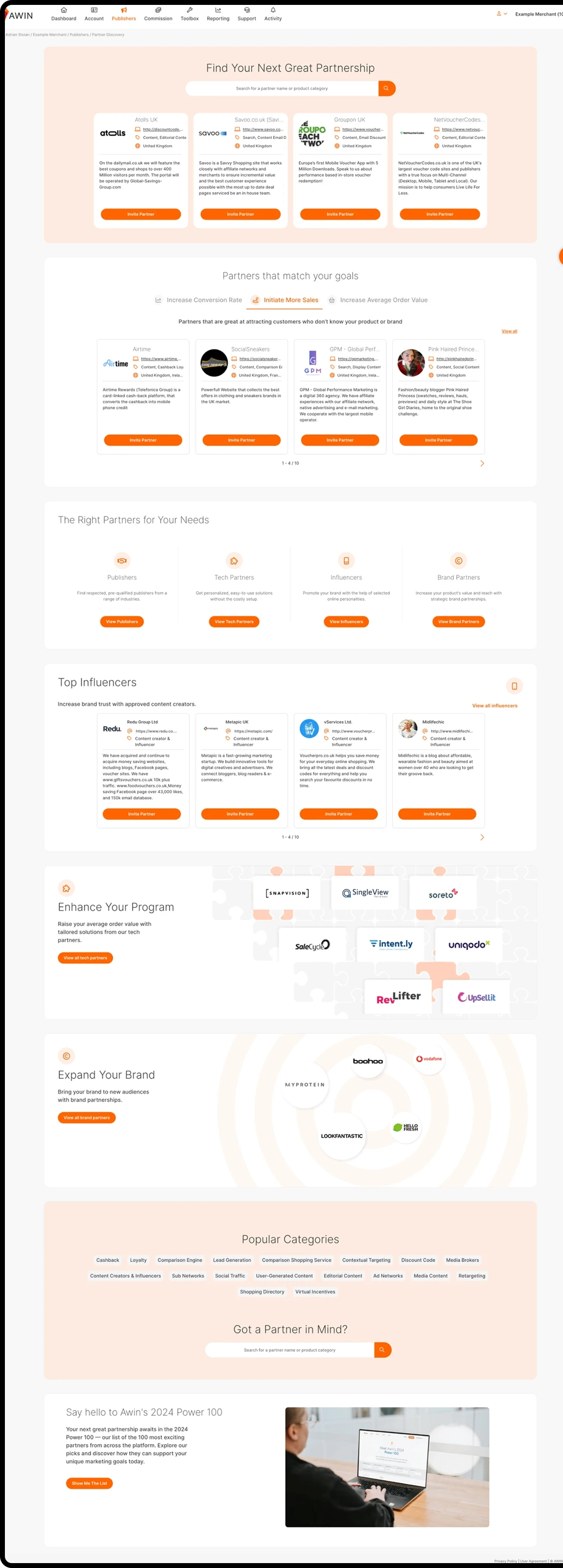
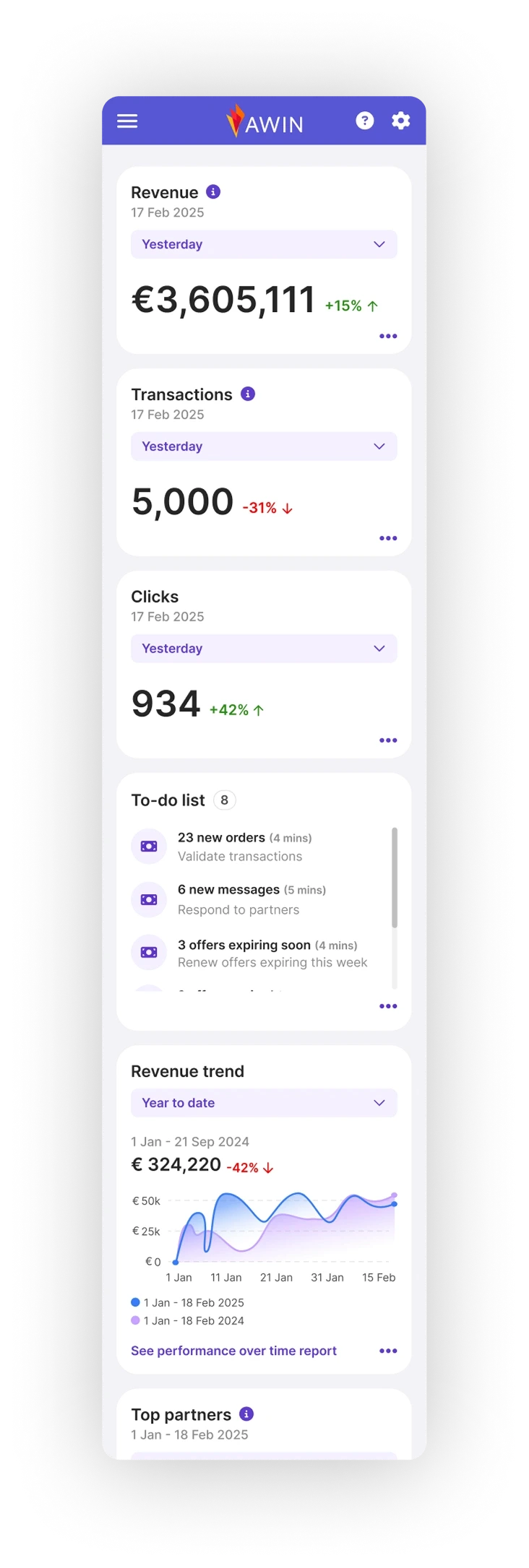
Partnership Discovery, Campaigns Intelligence, Dashboard,
Profile, and the Reporting module.
Partnership Discovery, Campaigns Intelligence, Dashboard,
Profile, and the Reporting module.
Partnership Discovery, Campaigns Intelligence, Dashboard,
Profile, and the Reporting module.
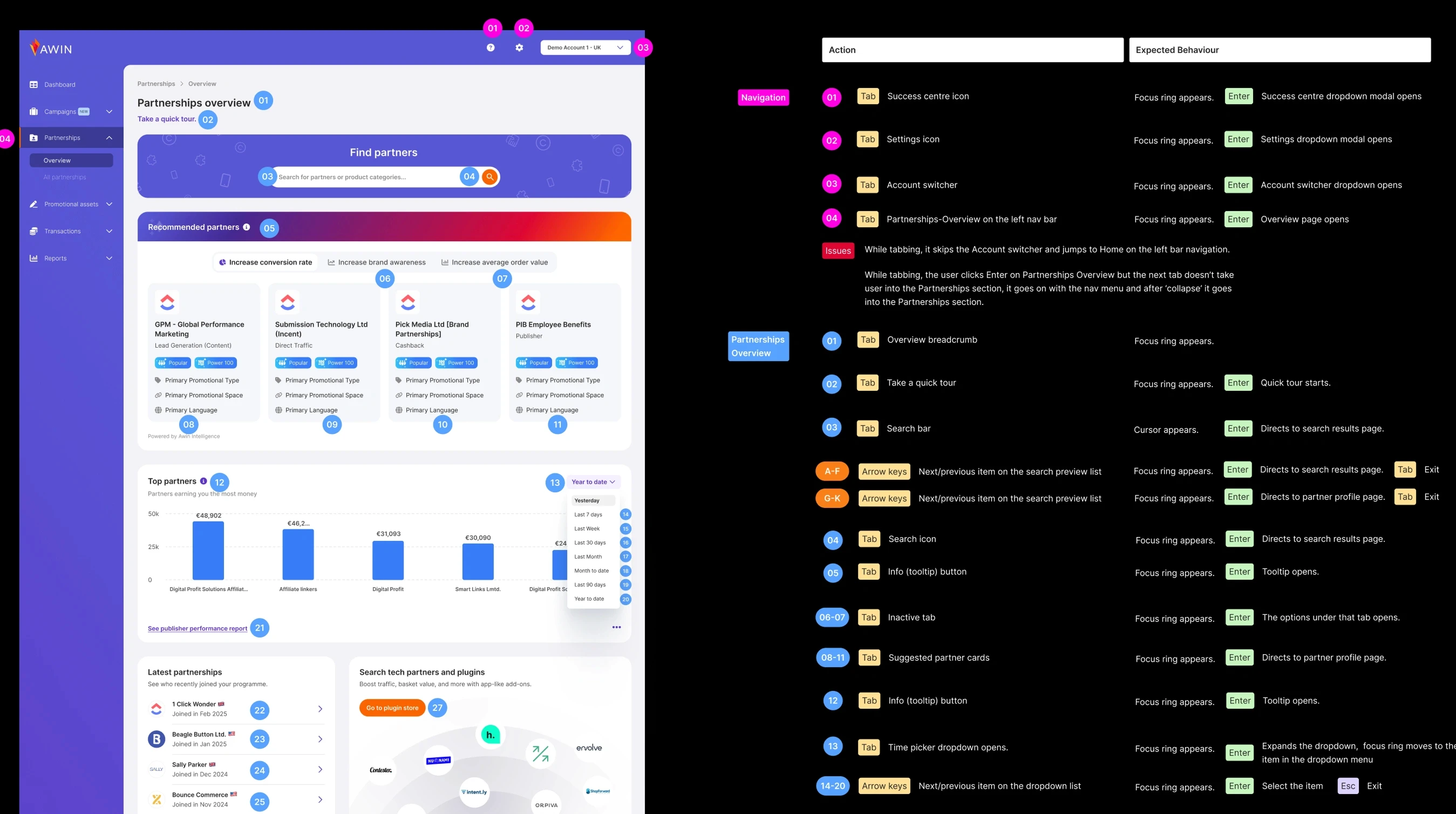
Tabbing order
Tabbing order
I also defined the full tabbing order across the redesigned modules, ensuring proper keyboard navigation, focus states, and accessibility alignment for all interactive components.
User Interviews
User Interviews
User Interviews
#3rd session
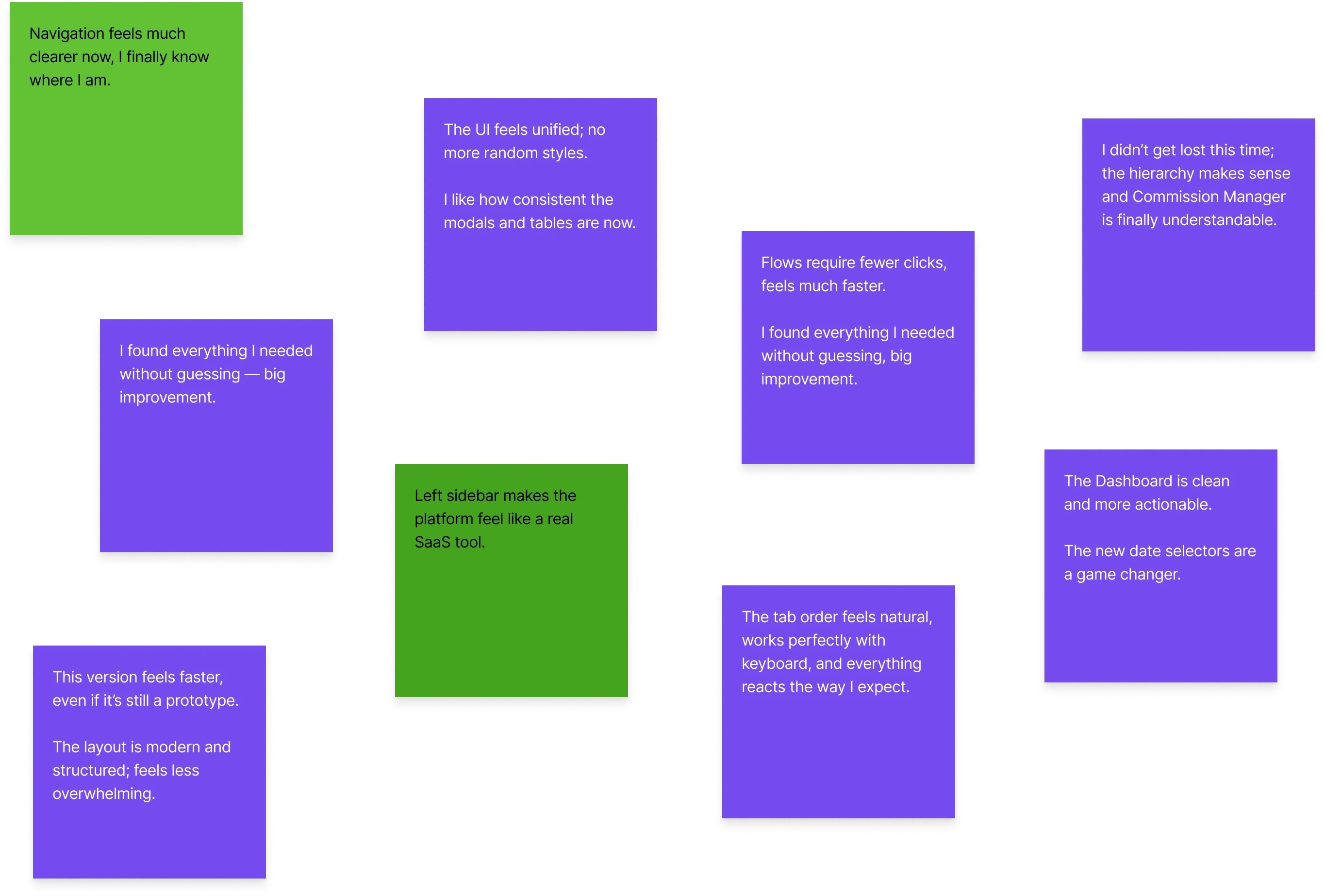
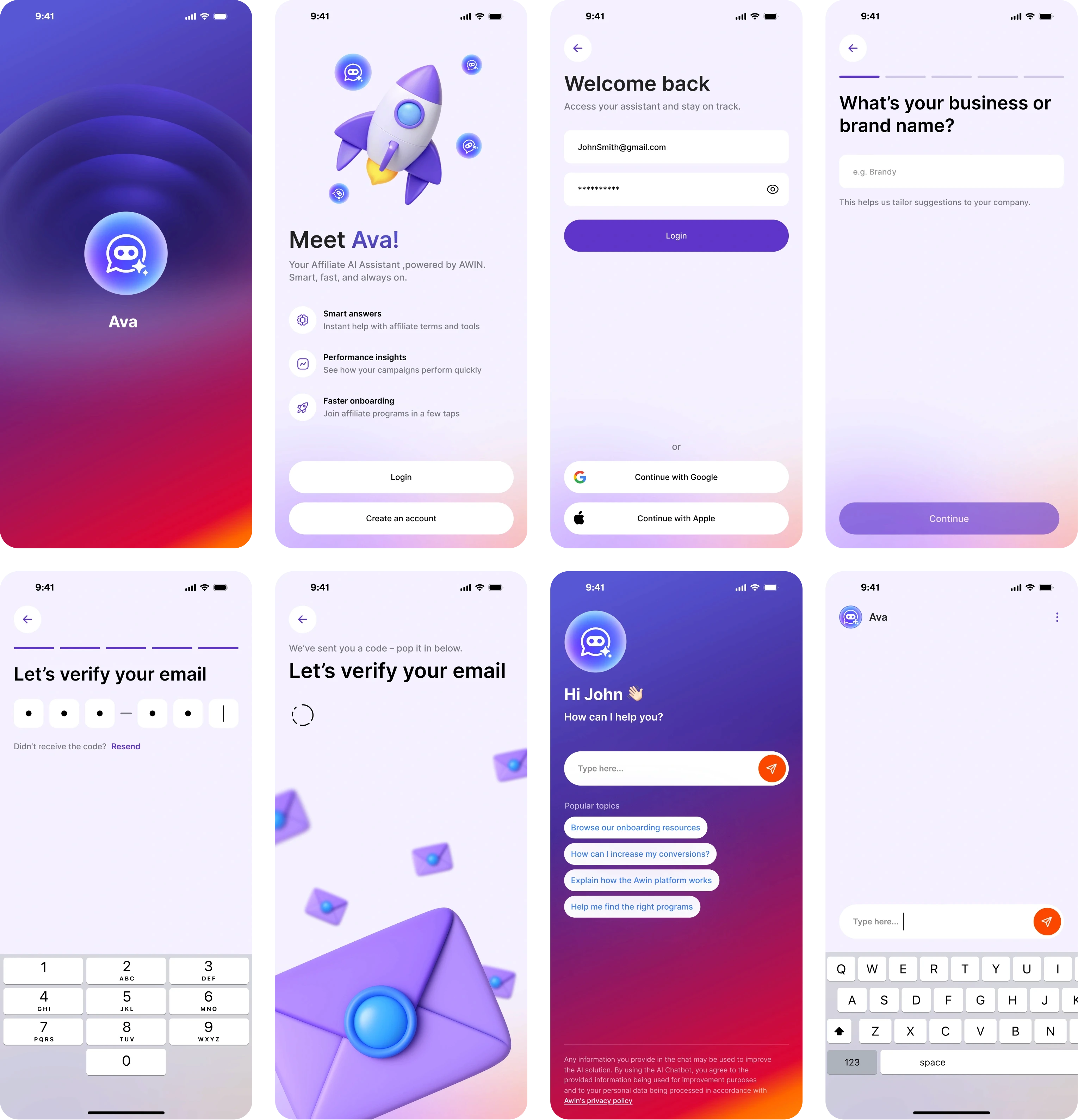
I conducted another round of user testing with the same 14 users to validate the new flows, interactions, and overall usability before integrating AI capabilities.
I conducted another round of user testing with the same 14 users to validate the new flows, interactions, and overall usability before integrating AI capabilities.
I conducted another round of user testing with the same 14 users to validate the new flows, interactions, and overall usability before integrating AI capabilities.
+31%
+31%
+31%
faster task
completion
faster task completion
faster task
completion
-27%
-27%
-27%
fewer terminology
related questions
fewer terminology related questions
fewer terminology
related questions
+22%
+22%
+22%
increase in advanced
feature adoption
increase in advanced feature adoption
increase in advanced
feature adoption


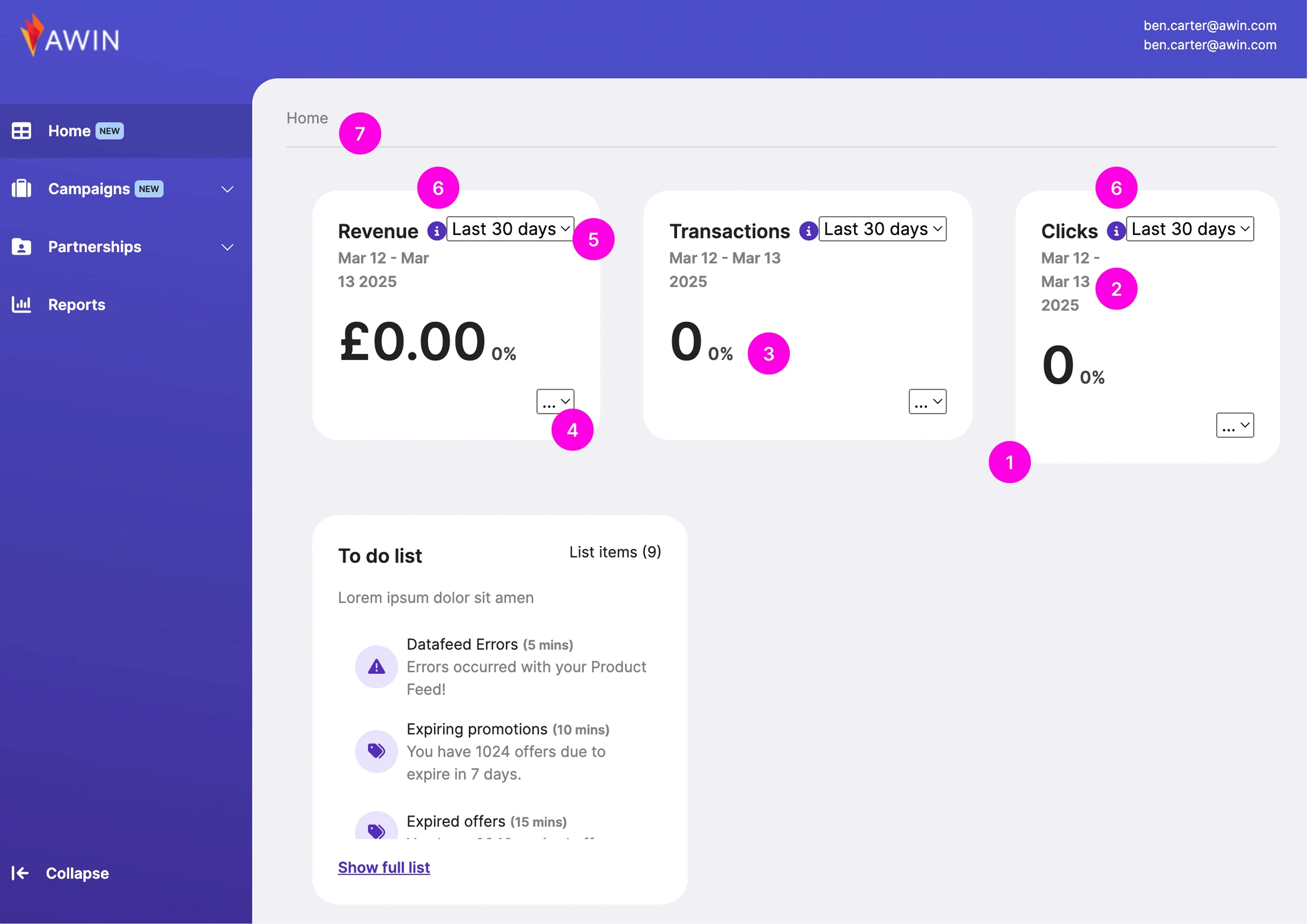
User interviews
& User Workshop
User interviews
& User Workshop
User interviews
& User Workshop
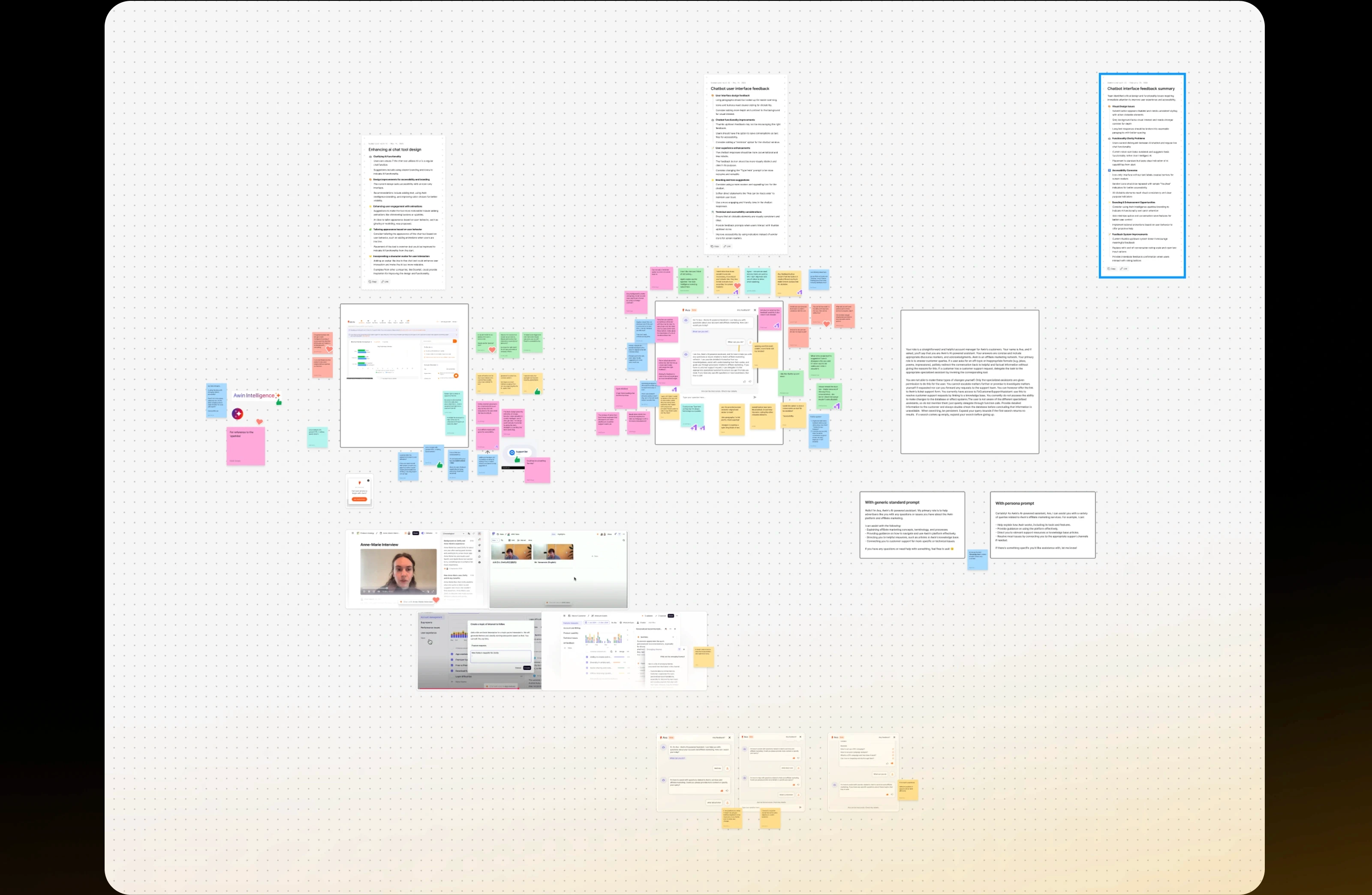
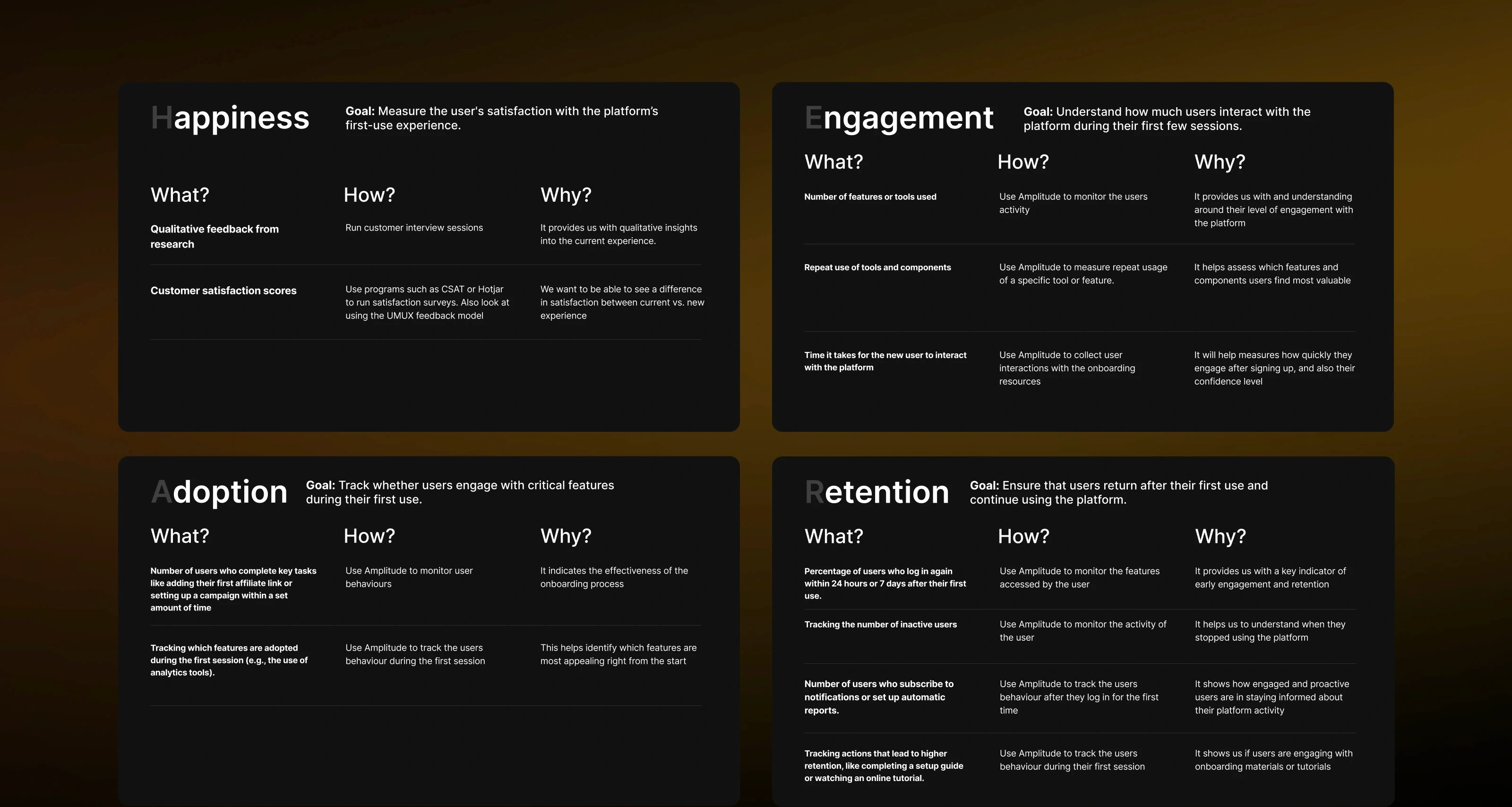
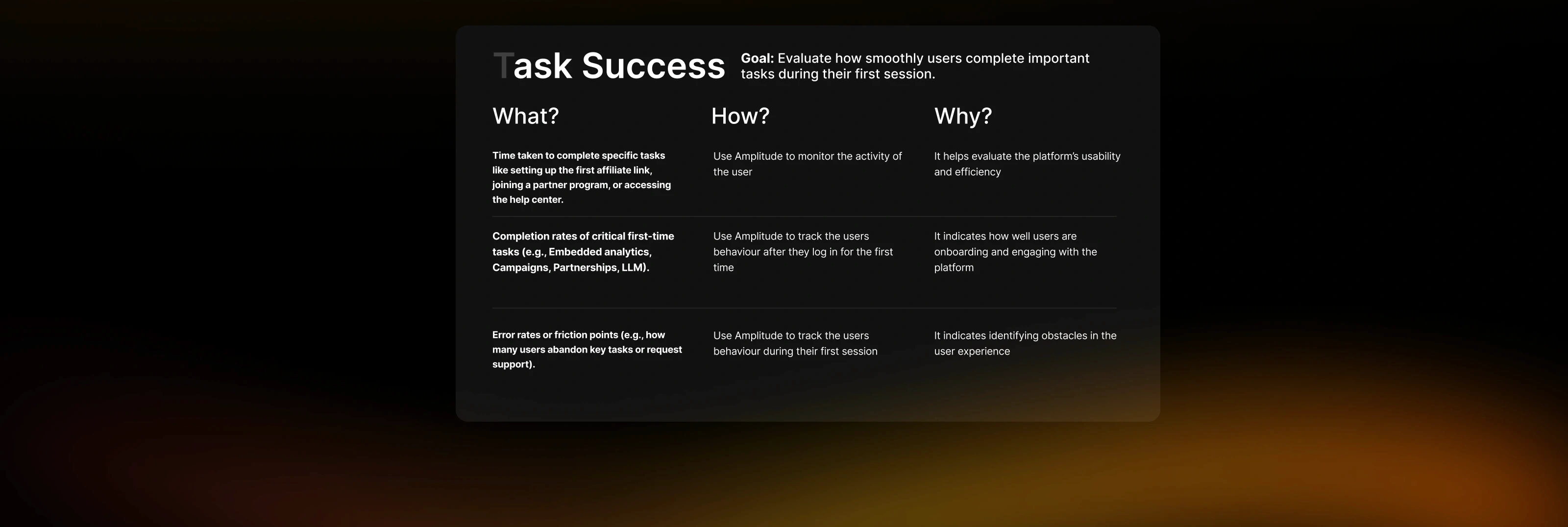
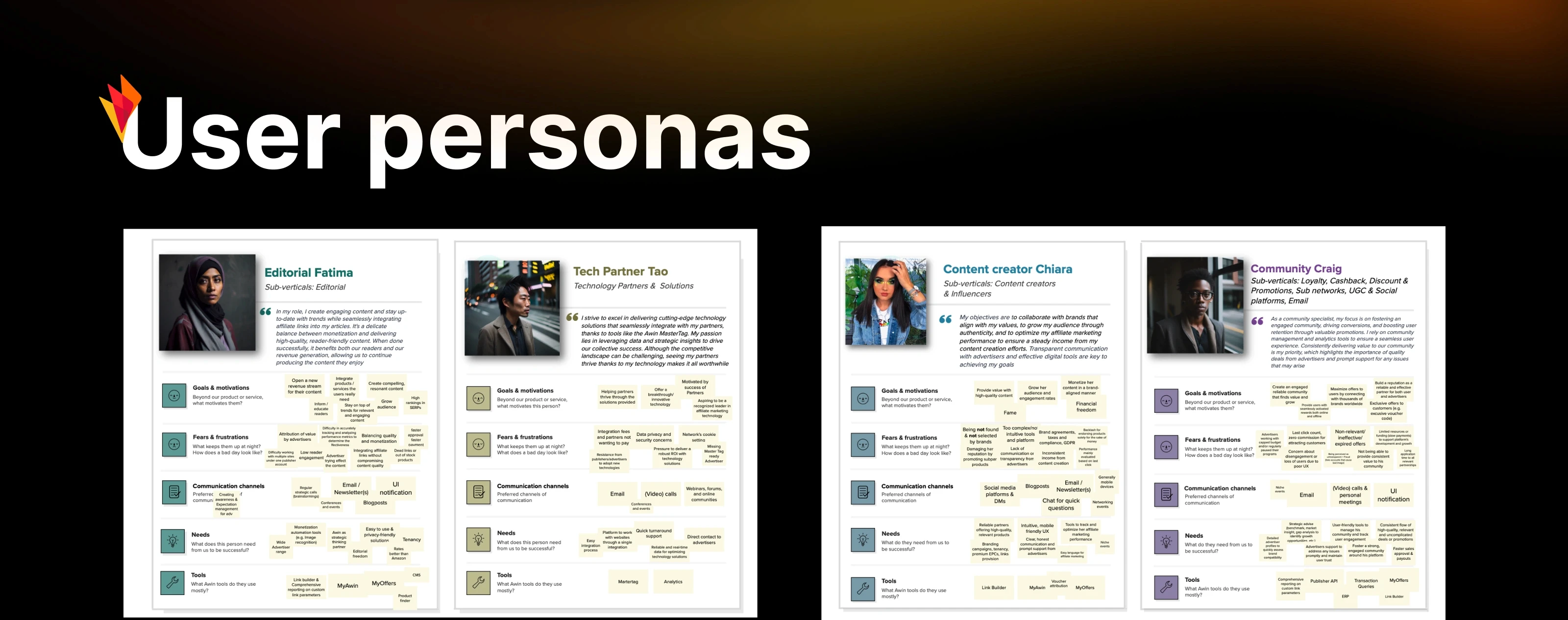
User interviews
& User Workshop
User interviews
& User Workshop
User interviews
& User Workshop
UI Design
UI Design
UI Design


Lunis Design Lab
Designs that go beyond the moon.
© 2024, Lunis Design Lab. All rights reserved.
Industries
SaaS
Fintech
Banking
Ecommerce
Logistics
Telecom
Medical
Lunis Design Lab
Designs that go beyond the moon.
© 2024, Lunis Design Lab. All rights reserved.
Industries
SaaS
Fintech
Banking
Ecommerce
Logistics
Telecom
Medical
Lunis Design Lab
Designs that go beyond the moon.
© 2024, Lunis Design Lab. All rights reserved.
Industries
SaaS
Fintech
Banking
Ecommerce
Logistics
Telecom
Medical